


- HRIS adoption reached 85% of organizations in 2025, making it a necessity rather than a competitive advantage for global companies.
- True global HRIS platforms have native compliance engines built into workflows, not just add-on modules or third-party partnerships that create data fragmentation.
- Most "global HRIS" systems still require separate EOR providers, payroll vendors, and contractor platforms, defeating the purpose of centralization.
- Implementation costs often equal 50-100% of annual software spend, making total cost of ownership far higher than base subscription pricing suggests.
Managing HR across borders with disconnected tools isn't just inefficient. It's a compliance disaster waiting to happen. Fragmented employee records mean you're one audit away from discovering gaps you never knew existed. Manual reporting means leadership makes expansion decisions on three-week-old data.
The right global HRIS creates a single source of truth that reflects how your workforce actually operates across jurisdictions.
But here's the truth most guides won't share: the best platform for your company probably isn't the most popular one here. It's the one matching your compliance footprint, integration needs, and internal capacity to implement properly.
Quick Comparison: 12 Global HRIS Platforms at a Glance
Ready to centralize your global HR operations? Book a demo to see how Gloroots runs employment, payroll, and compliance across 150+ countries from one platform.
HRIS adoption reached 85% of organizations in 2025, up from 40% in 2016. The question isn't whether you need one. It's whether yours can scale with growth.
What Is Global HRIS ?
A global HRIS is a unified human resources information system that manages
- employee data
- payroll inputs
- benefits administration
- compliance requirements
- statutory reporting
- local tax calculations
across multiple countries from a single platform while adapting to jurisdiction-specific labor laws, tax structures, and statutory reporting obligations.
What Makes a Global HRIS Different?
A standard HRIS centralizes employee data and automates core workflows like onboarding, time tracking, and performance reviews. It handles these functions well for single-country operations with uniform labor laws and payroll structures.
A global HRIS manages employee data across multiple countries while maintaining local compliance. It handles multi-currency payroll inputs, supports localized employment contracts, and adapts workflows to jurisdiction-specific requirements. The critical difference is native support for legal variance, not just multi-language interfaces, but actual regulatory logic built into system architecture.
Most platforms marketed as "global" are single-country systems with add-on modules or third-party partnerships.
True global HRIS platforms centralize employee records while preserving country-specific compliance rules, tax calculations, and statutory reporting. This eliminates data silos that emerge when running Workday in the US, a local payroll system in Germany, and spreadsheets everywhere else.
Why Global Companies Are Switching to Unified HRIS?
The global HR technology market reached $42.5 billion in 2025 (baseline), growing at 12.8% annually toward $76.4 billion by 2030. This reflects operational necessity as distributed workforce models become permanent.
Centralize employee data across geographies
- Operating HR in regional silos prevents answering basic questions: What's our actual global headcount today? Where are we over budget on contractor spend?
- A global HRIS consolidates records, employment status, compensation, and performance data regardless of location.
Automate multi-country compliance
- Manual compliance tracking fails at scale. When labor laws change in France or statutory benefits shift in Singapore, you need systems updating regulatory rules automatically.
- Global HRIS platforms with native compliance engines build local requirements into workflows. Onboarding in Brazil automatically includes CLT contract templates and FGTS calculations.
Enable real-time workforce insights
- Fragmented systems turn every report into manual data collection.
- A centralized HRIS makes workforce analytics accessible in real-time, transforming HR from reporting bottleneck to strategic planning function.
Scale without adding HR headcount
- Growing from 50 to 500 employees across 10 countries shouldn't triple your HR team.
- Global platforms automate workflows requiring no human judgment: onboarding tasks, document collection, time-off approvals, performance cycles.
12 Best Global HRIS Software to Consider in 2026
Before you compare individual platforms, remember that the right fit depends on your compliance footprint, countries of operation, and how much of the employment layer you want to consolidate.
Evaluating global HRIS options? Book a demo with Gloroots to see how one platform can run employment, payroll, and compliance across 140+ countries.
1. Gloroots HRIS
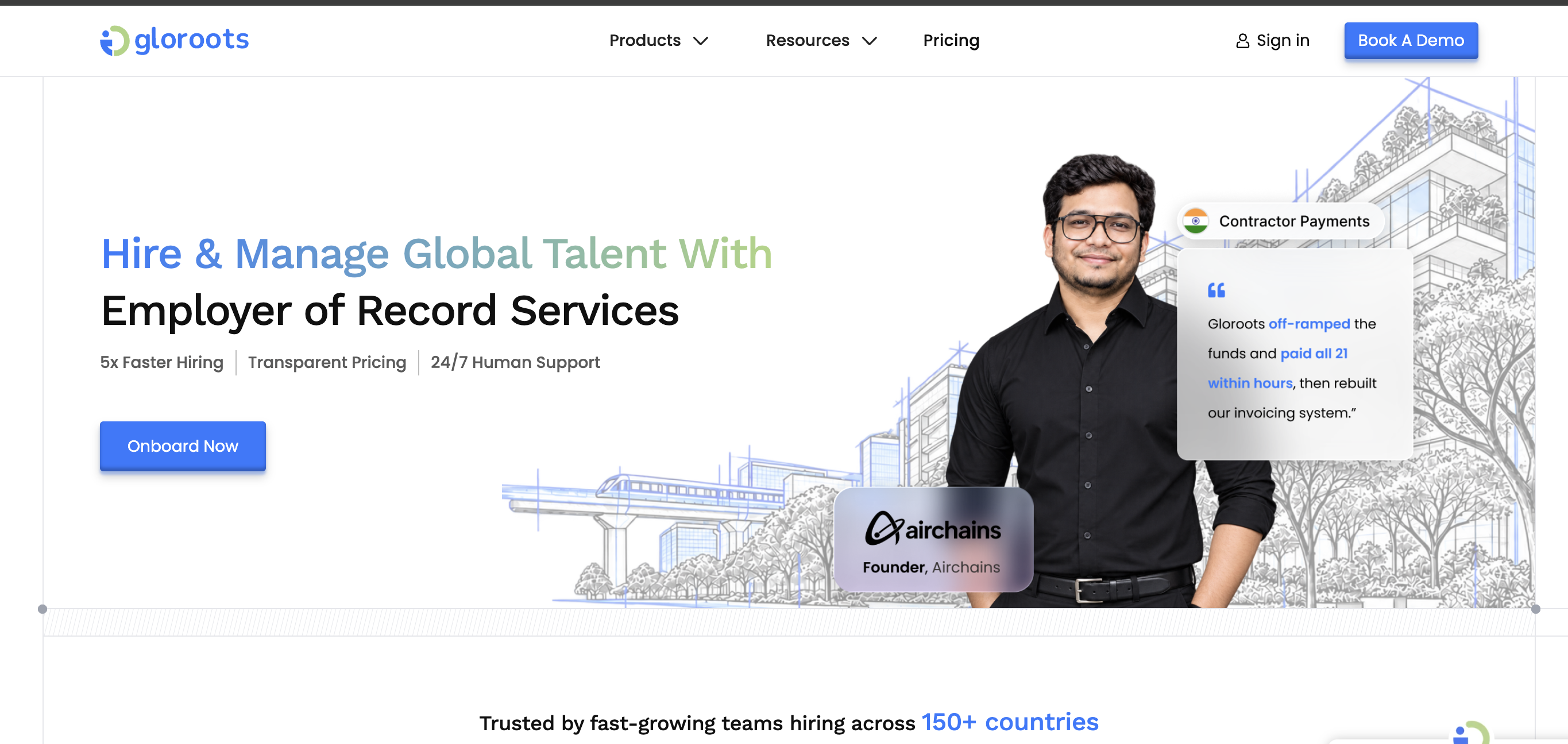
Gloroots combines HRIS, Employer of Record (EOR), and contractor management in a unified compliance-first platform built specifically for companies scaling internationally. Unlike platforms retrofitting global features onto domestic systems, Gloroots was designed from the ground up for multi-country employment complexity.
The platform bridges the gap between HRIS and employment infrastructure. Many companies discover their "global HRIS" still requires separate EOR providers, payroll vendors, and contractor payment systems, creating the exact fragmentation they tried to eliminate.
Gloroots integrates all three layers. When you hire an employee in Brazil through their EOR service, that person's data flows into your HRIS automatically without manual imports or API mappings.
Key Capabilities:
- India GCC specialization: Accelerates Global Capability Center setup with PF/ESIC/gratuity handling, statutory compliance, and local HR advisory. Critical for tech companies building engineering hubs in Bangalore, Hyderabad, or Pune.
- Unified employment infrastructure: Manages EOR employees, direct hires, and contractors in one system with smooth conversion pathways when contractors transition to full-time.
- Compliance-first architecture: Country-specific legal playbooks built into workflows reduce misclassification risk and ensure statutory filings happen automatically.
- Finance-ready reporting: Line-item invoices with country-level breakdowns, GL mapping, and audit-ready exports eliminate month-end reconciliation nightmares.
- Transparent FX handling: Multi-currency payroll with clear audit trails prevents hidden costs.
Strengths:
- Platform plus managed service model: Self-service dashboards with dedicated Customer Success Managers who understand local compliance nuances.
- Speed: Enables hiring in days instead of waiting months to establish legal entities. Critical for opportunistic hiring or pilot market entry.
- Integration depth: Native connections prevent data fragmentation across employment types.
Limitations:
- Newer platform compared to legacy enterprise systems, though this typically means modern architecture and faster feature development.
- Focused strength in India/Asia may matter less for companies prioritizing Latin America or Africa expansion.
Best For: Companies expanding into India, scaling GCCs, or needing integrated EOR + HRIS + contractor management rather than stitching together three vendors.
See Gloroots in action. Book a demo to explore how unified EOR, HRIS, and contractor management can replace your fragmented vendor stack.
2. Rippling
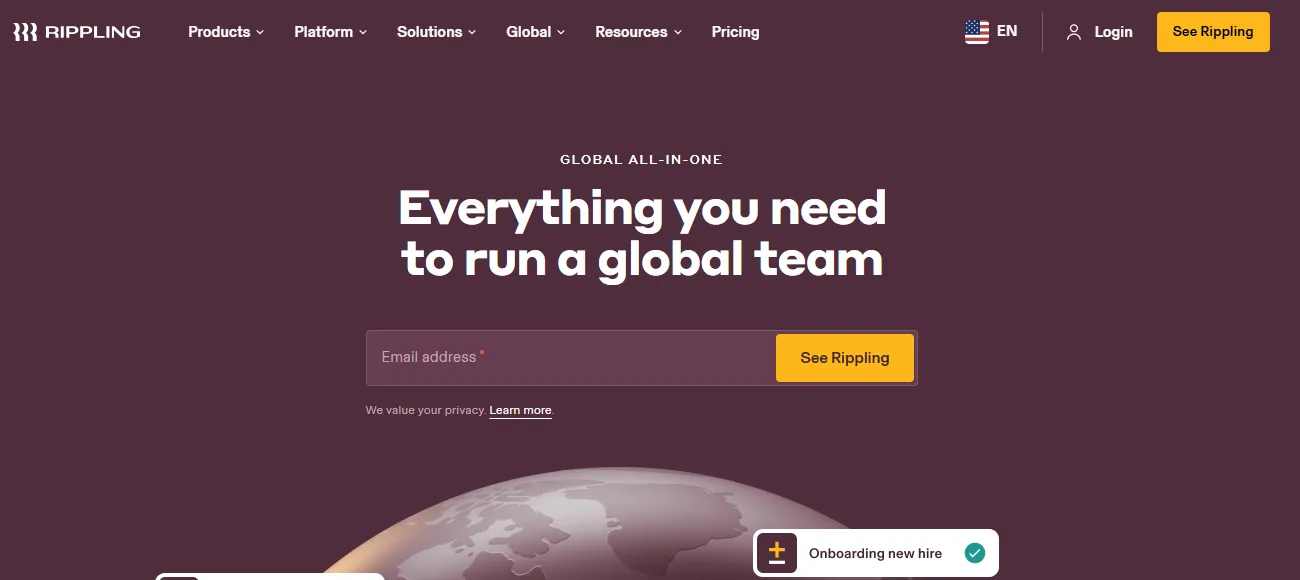
Rippling is an all-in-one workforce platform combining HRIS, payroll, IT management, and device provisioning. It appeals to tech companies managing both HR and IT infrastructure centrally. Verify Rippling's current published country coverage on their site, as native global payroll coverage continues to expand.
Key Features:
- Unified employee system linking HR to IT access
- Native global payroll across multiple countries (check vendor for latest coverage)
- Workflow automation builder
- Benefits administration
Pros:
- Strong HR-IT integration
- Fast implementation
- Clean interface
Cons:
- Global payroll uses third-party providers in many countries
- Compliance guidance is less robust outside major markets
- Premium features drive costs higher than base pricing
Best For: Tech startups operating primarily in North America and Western Europe.
3. Deel
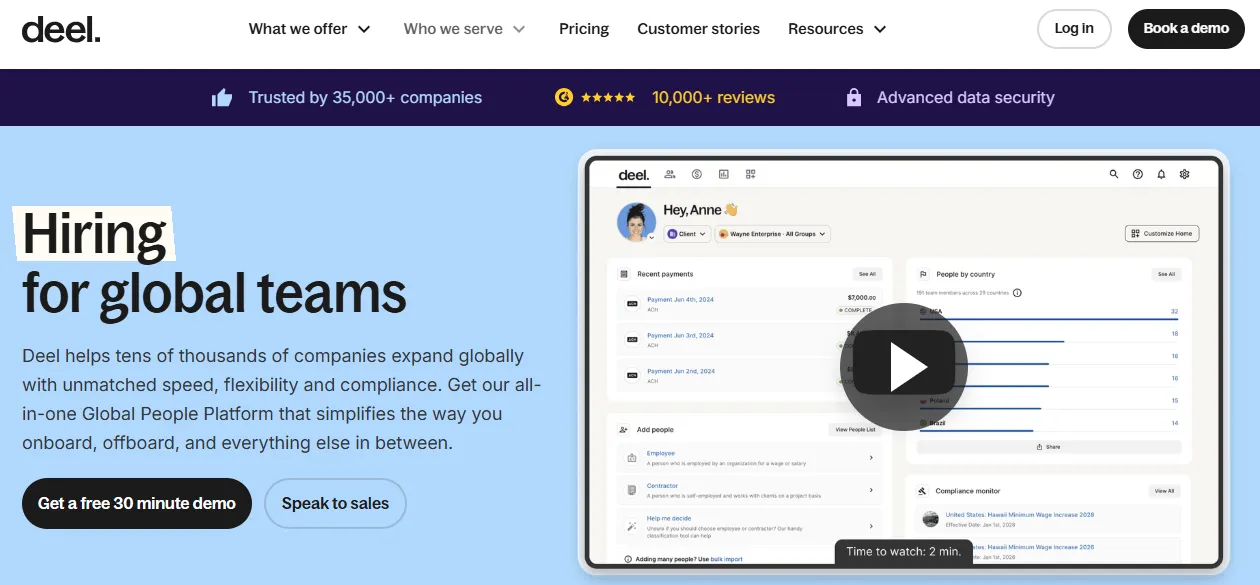
Deel built a reputation on contractor payments and expanded into EOR and HRIS. Strong brand recognition in the startup ecosystem for managing large, distributed contractor workforces.
Key Features:
- Contractor onboarding in 150+ countries
- EOR services
- Compliance templates
- Multi-currency processing
Pros:
- Fast contractor payments
- Broad geographic coverage
- Strong accounting integrations
Cons:
- HRIS features are less mature than core contractor/EOR functionality
- Compliance primarily template-based
- Implementation quality varies by market
Best For: Companies with contractor-heavy workforce models or prioritizing speed over compliance depth.
4. Remote
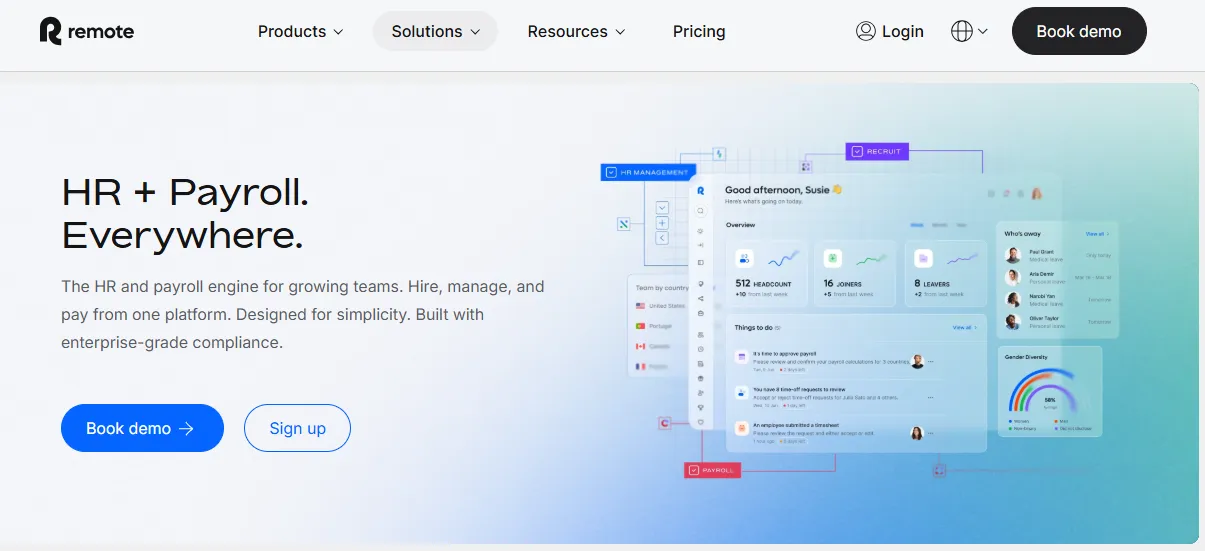
EOR, contractor management, and global payroll with emphasis on compliance infrastructure. Positioned for companies serious about distributed workforce compliance.
Key Features:
- EOR in 75+ countries
- IP and equity management
- Global payroll coordination
- Compliance dashboard
Pros:
- Strong compliance focus with legal advisory support
- Equity tools for tech companies
- Transparent pricing
Cons:
- HRIS analytics are less comprehensive
- Implementation timelines longer than advertised
- Support responsiveness varies by customer tier
Best For: High-growth tech companies managing equity across international teams.
5. OrangeHRM
OrangeHRM lets organizations start small and scale big, and is a modular HR platform trusted by over 5 million users who add HR capabilities, from first hire to global workforce.
Key Features:
- Citra AI assistant for leave, balances, and employee lookups
- AI Job Fit Scoring and appraisal summaries
- Recruitment, onboarding, performance, leave, and time tracking in one system
- 30+ integrations, including ADP, Okta, and Power BI
Pros:
- No vendor lock-in, with cloud or self-hosted deployment
- Modular pricing, so teams pay only for what they use
- Zero-retention AI policy that protects customer data
- Scales from small teams to multinational enterprises
- 30-day free trial of the Advanced edition
Cons:
- AI and advanced modules require a paid plan
- Payroll runs through integrations, not natively
- Self-hosting requires in-house technical resources
- The wide range of modules can lengthen initial setup
Best For: Companies that want a flexible, modular HR system and are comfortable pairing it with a dedicated payroll or EOR provider for compliance across markets.
6. Hibob
Modern HRIS with strong employee engagement features for mid-market companies. Emphasizes culture-building tools alongside core HR functionality.
Key Features:
- Performance management and OKR tracking
- Employee engagement surveys
- Onboarding workflows
- Time-off management
Pros:
- Excellent user experience design
- Strong self-service portal
- Culture and engagement tools
Cons:
- Limited native global payroll
- Compliance features less robust
- Basic analytics compared to enterprise systems
Best For: Mid-market companies (100-500 employees) prioritizing employee experience over complex compliance.
7. BambooHR
Serves small to mid-sized businesses with straightforward HR needs. Known for ease of use but limited global capabilities.
Key Features:
- Applicant tracking
- Employee self-service
- Performance management
- Reporting dashboards
Pros:
- Extremely easy to implement
- Affordable
- Strong customer support
Cons:
- Not designed for multi-country operations
- No native global payroll
- Limited customization
Best For: Domestic companies with occasional international hires.
8. Workday HCM
Enterprise HR with comprehensive workforce management and financial integration. Built for large organizations with complex structures.
Key Features:
- Enterprise workforce planning
- Global payroll through partners
- Talent management
- Financial system integration
Pros:
- Most robust analytics and reporting
- Scalable to tens of thousands
- Strong governance
Cons:
- Implementation requires 6-12 months
- Extremely expensive
- Overkill for companies under 1,000 employees
Best For: Enterprises with 1,000+ employees and dedicated HRIS implementation teams.
9. SAP SuccessFactors
Comprehensive talent management integrated with SAP's enterprise ecosystem. Dominant in manufacturing and traditional industries.
Key Features:
- Performance management
- Learning management integration
- Compensation planning
- Succession planning
Pros:
- Deep SAP ERP integration
- Strong in regulated industries
Cons:
- Complex implementation requiring SAP consultants
- Dated user interface
- Costly to maintain
Best For: Large enterprises with existing SAP ecosystems.
10. ADP Workforce Now
HRIS combined with ADP's established payroll infrastructure. Strong in US market with expanding international capabilities.
Key Features:
- Comprehensive US payroll
- Benefits administration
- Time tracking
- Talent management
Pros:
- Extremely reliable payroll processing
- Strong US compliance support
Cons:
- Global capabilities through partner network, not native
- User experience lags competitors
Best For: US-based companies with large domestic workforces and occasional international hires.
11. Oracle HCM Cloud
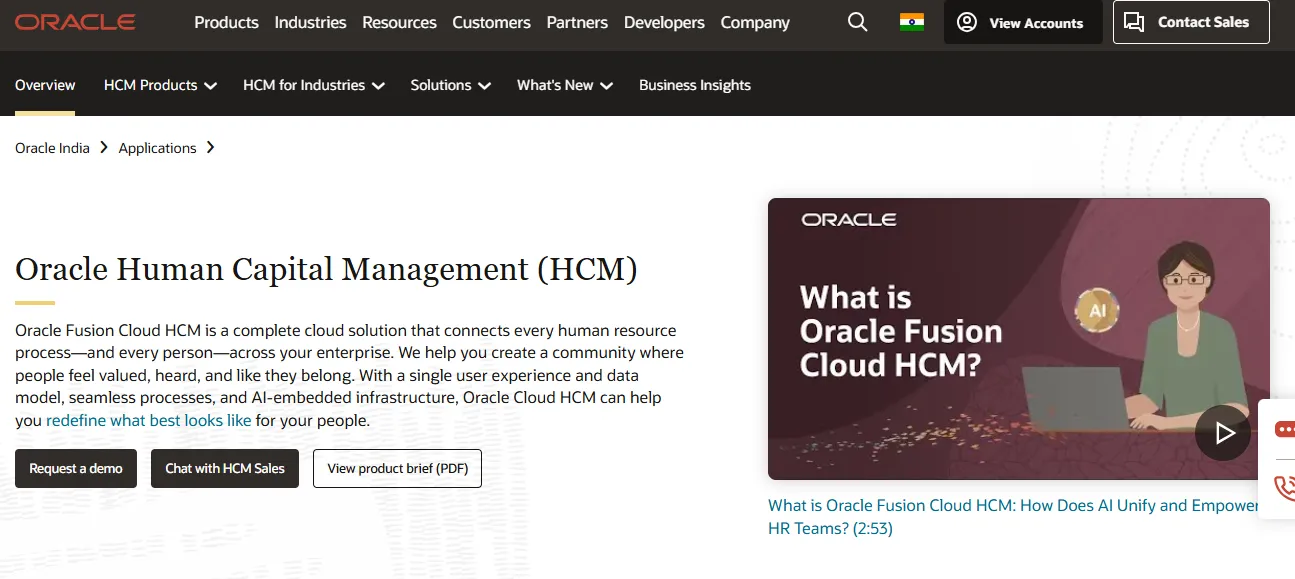
Enterprise HR and workforce planning integrated with Oracle's cloud ecosystem. Competes with Workday and SAP in large enterprise deals.
Key Features:
- AI-powered recruiting
- Workforce modeling
- Global payroll through partners
- Chatbot service delivery
Pros:
- Advanced AI capabilities
- Highly customizable
- Strong security
Cons:
- Requires significant implementation investment
- Steep learning curve
Best For: Large enterprises with existing Oracle infrastructure.
12. Namely
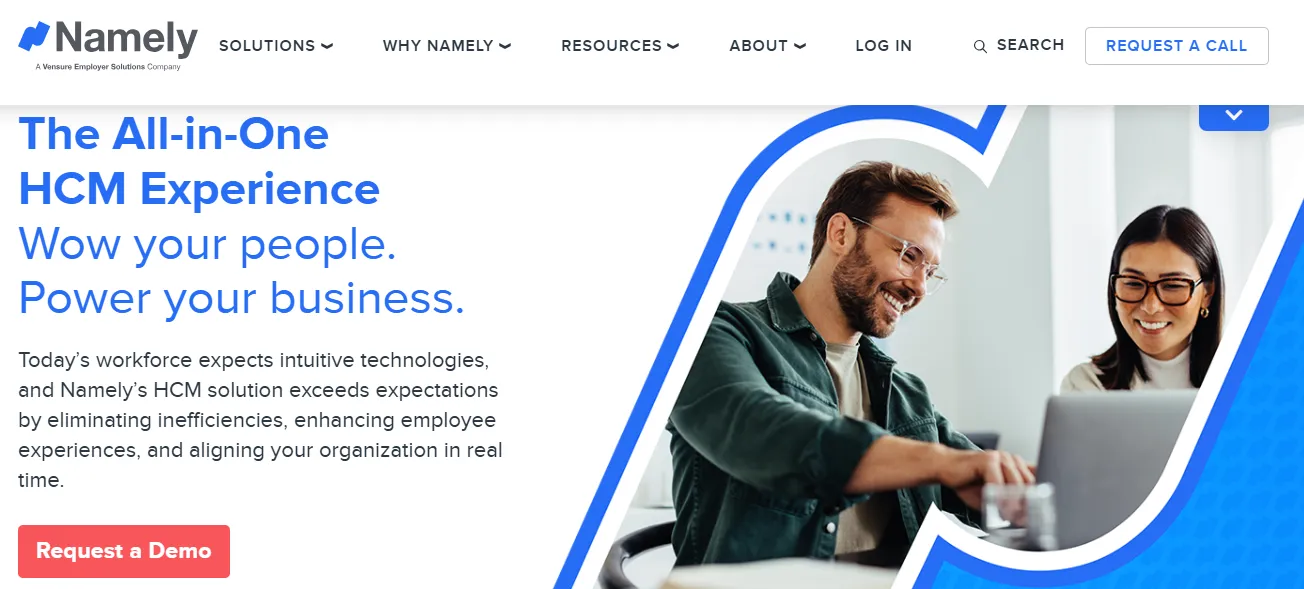
Full-service HRIS with built-in payroll for mid-market companies. Positioned between small business tools and enterprise platforms.
Key Features:
- Integrated payroll and benefits
- Customizable workflows
- Employee engagement tools
- Compliance alerts
Pros:
- Full-service model with account management
- Modern interface
- Good mobile experience
Cons:
- Limited global capabilities, primarily US-focused
- Implementation quality inconsistent
Best For: US mid-market companies wanting integrated payroll and HRIS without enterprise complexity.
How to Choose the Right Global HRIS?
"The companies that get global HRIS right are the ones that evaluate platforms based on how employment actually runs over time, not how fast the first hire onboards. Compliance depth, payroll predictability, and centralized governance matter far more at scale than feature checklists." — Rima Dutta
Use the steps below to evaluate platforms against your actual operating needs.
1. Map Your Current HR Pain Points
Start by documenting what's actually broken in your current setup:
- Are you spending hours manually compiling headcount reports?
- Missing compliance deadlines because you didn't know local laws had changed?
- Losing candidates because onboarding takes three weeks?
Your pain points determine which features matter most. A company struggling with payroll errors needs different capabilities than one losing top talent due to slow hiring processes.
2. Define Requirements by Region
List every country where you operate or plan to expand in the next 18 months. For each jurisdiction, identify whether you need:
- Native payroll processing
- EOR capabilities
- Contractor payment infrastructure
- Employee data management only
Example: If you're building a GCC in India, platforms with deep India specialization matter more than broad but shallow global coverage.
3. Audit Compliance Capabilities Rigorously
Ask specific questions during vendor evaluations:
- How do you handle mid-year tax law changes in France?
- What happens when minimum wage increases in a state or province?
- Who monitors labor law updates in the 40+ countries you claim to support?
- How quickly are system updates deployed after regulatory changes?
Request customer references from companies operating in your exact jurisdictions. Generic compliance claims mean nothing without verification.
4. Test User Experience and Support Quality
Schedule demos with people who will actually use the system daily:
- HR coordinators managing employee records
- Payroll administrators processing payments
- Hiring managers reviewing candidates
- Employees accessing self-service features
Evaluation criteria:
- Can users navigate intuitively without extensive training?
- Is the employee self-service portal mobile-friendly?
- Does support respond in local languages and time zones?
- Are help resources available for country-specific workflows?
5. Calculate Total Cost of Ownership
Platform subscription fees are just the starting point. Build a complete cost picture that includes:
- Implementation costs (often 50-100% of annual software spend)
- Integration development with existing tools
- Data migration from current systems
- Administrator training and onboarding
- Ongoing support and maintenance
If the HRIS doesn't include global payroll automation or you still need an EOR provider for certain markets, factor those additional costs into your total ownership calculation.
Simplify Global HR with Gloroots
Most global HRIS platforms force you to choose between comprehensive coverage and deep compliance, or require integrating three separate vendors. Gloroots eliminates that tradeoff.
Gloroots builds local regulatory requirements directly into platform workflows. When you onboard an employee in Germany, the system automatically applies German probation rules, annual leave entitlements, and works council requirements. As labor laws change, updates flow into your workflows without monitoring legal bulletins across 15 time zones.
Instead of managing employee data in one system, running global payroll automation through a second vendor, and relying on EOR services for markets without entities, Gloroots consolidates all workforce types in a single platform.
Run global employment from one platform.
Book a Demo to see how Gloroots supports hiring across 150+ countries with built-in compliance.
Prefer to explore on your own? Sign Up to get started.
Frequently Asked Questions
1. What's the difference between a global HRIS and a regular HRIS?
A regular HRIS manages employee data for a single country. A global HRIS adds multi-country compliance engines, localized workflows, and multi-currency payroll integration with regulatory compliance built into platform architecture.
2. How much does a global HRIS typically cost per employee?
Based on the latest available pricing benchmarks, basic HRIS platforms cost $2-$8 per employee monthly, while comprehensive global suites range from $8-$30, with enterprise platforms charging $15-$40+ monthly.
3. Can a global HRIS replace my EOR provider?
Not usually. HRIS platforms centralize data but don't become the legal employer in foreign jurisdictions. Some platforms like Gloroots integrate both capabilities in one system.
4. How long does it take to implement a global HRIS?
Simple implementations take 6-12 weeks. Mid-market implementations require 3-6 months. Enterprise platforms often take 6-12 months or longer.
5. Do I need an HRIS if I only operate in 2-3 countries?
If you're maintaining employee data in spreadsheets, manually tracking compliance, or spending hours compiling reports, an HRIS delivers ROI even at small scale. The question is whether your HR infrastructure can scale with planned growth.