



- Slovakia classifies employment termination as difficult under the Labor Code, with notice periods of one to three months based on tenure and statutory severance pay requirements, making an EOR that manages offboarding procedures a practical risk-reduction tool.
- EU membership means Slovak hiring involves GDPR obligations, EU posting compliance, and A1 certificate management for cross-border assignments, all of which a qualified EOR handles on behalf of the client company.
- An EOR can employ a Slovak worker in one to two weeks, compared to the four to eight weeks typically required to incorporate a local limited liability company, making entity-free hiring the faster path for market entry.
- Employer social security contributions in Slovakia are set at 35.2%, with a separate 14% health insurance obligation, and an EOR takes full ownership of filing these with Slovak authorities each monthly payroll cycle.
- Providers vary significantly on direct legal entity presence in Slovakia, with Atlas HXM and Remote confirming direct entities while several others reviewed did not disclose entity status in publicly available sources.
Slovakia operates on Central European Time (GMT+1), uses the euro (EUR), runs monthly payroll cycles, and follows the DD/MM/YYYY date format. Employment termination is classified as difficult under Slovak labor law, which means companies must follow strict notice periods and redundancy procedures before ending an employment relationship.
Slovakia is an established hiring destination in Central and Eastern Europe. EU membership gives companies access to a mobile, skilled workforce and simplified cross-border employment. The automotive and IT sectors are particularly active, with a growing pool of qualified professionals across Bratislava, Košice, and other industrial centers.
This page evaluates eight best employer of record providers for Slovakia using consistent criteria: pricing, country coverage, onboarding speed, platform experience, customer support, and scalability.
Our Top 8 Picks: Slovakia EOR Comparison 2026
The table below covers eight providers evaluated for Slovakia hiring across seven criteria. Pricing figures reflect publicly available starting rates at the time of research and are subject to change.
| Provider | Pricing per month | Country coverage | Onboarding speed | Platform experience | Customer support | Scalability |
|---|---|---|---|---|---|---|
| Gloroots | From $199/employee/month | 150+ countries | 3–5 working days | Unified platform for hiring, onboarding, payroll, compliance, benefits, expenses, and workforce visibility | 24/7 human support with dedicated specialists | SMB to enterprise; supports companies scaling across 150+ countries |
| Atlas HXM | Custom pricing / quote-based | 160+ countries with direct legal entities | As little as 2 weeks | Direct EOR platform with centralized onboarding, payroll, compliance, HR, and workforce management | Dedicated account management, local HR expertise, and compliance support | SMB to enterprise; direct infrastructure designed for large-scale global expansion |
| Remote | $699/employee/month | 90+ EOR countries | Onboarding with a dedicated specialist; no fixed universal timeline publicly listed | Digital-first global employment platform covering EOR, payroll, benefits, compliance, contractors, and workforce management | 24/7 specialist support with local HR, legal, and finance expertise | SMB to enterprise; suited to distributed teams scaling internationally |
| Globalization Partners (G-P) | Custom pricing / contact sales | 180+ countries | Not publicly listed as a fixed universal timeframe | G-P Global Employment Platform / Meridian covering hiring, onboarding, payroll, compliance, and workforce management | 24/7 support with in-country experts and customer-success resources | Mid-market to enterprise; designed for complex multinational workforce operations |
| Payoneer Workforce Management | From $199/employee/month | 160+ countries | 1–2 weeks | Unified platform covering onboarding, employment contracts, payroll, compliance, benefits, payments, and workforce management | 24×5 dedicated account managers and localized support | SMB to enterprise; designed to scale global hiring across 160+ countries |
| Oyster HR | $699/employee/month | 120+ EOR countries; 180+ countries for broader global talent engagement | As fast as 48 hours in supported workflows; country-dependent | Remote-first global employment platform covering hiring, onboarding, payroll, benefits, expenses, time off, and compliance | Local HR specialists and dedicated support resources | Startups to enterprise; suited to remote and distributed international teams |
| GoGlobal | Custom pricing / quote-based | 100+ countries | Rapid onboarding; no fixed universal timeline publicly listed | BlueOcean platform for onboarding, payroll, HR, compliance, and global workforce management, supported by in-country experts | Dedicated account manager with local/in-country support | SMB to enterprise; supports multinational workforce expansion and complex global HR operations |
| Deel | $599/employee/month for EOR | 130+ EOR countries | Automated onboarding; no fixed universal timeline publicly listed | Unified global workforce platform covering EOR, contractors, payroll, HR, benefits, compliance, visas, and integrations | 24/7 support with in-house HR, legal, and tax expertise | SMB to enterprise; supports geographically distributed teams at scale |

Top 8 Best EOR Platforms in Slovakia
The eight providers below were selected based on compliance depth, direct entity presence, onboarding speed, pricing transparency, support model, and scalability for Slovakia-based hiring. These criteria reflect what matters most to companies hiring in a market governed by the Slovak Labor Code and EU employment regulations.
Gloroots appears first as the page owner. The remaining seven providers are listed in no strict ranking order. All provider data is drawn from publicly available sources and the Gloroots brand documentation. Editorial selection is independent of commercial relationships.
Gloroots
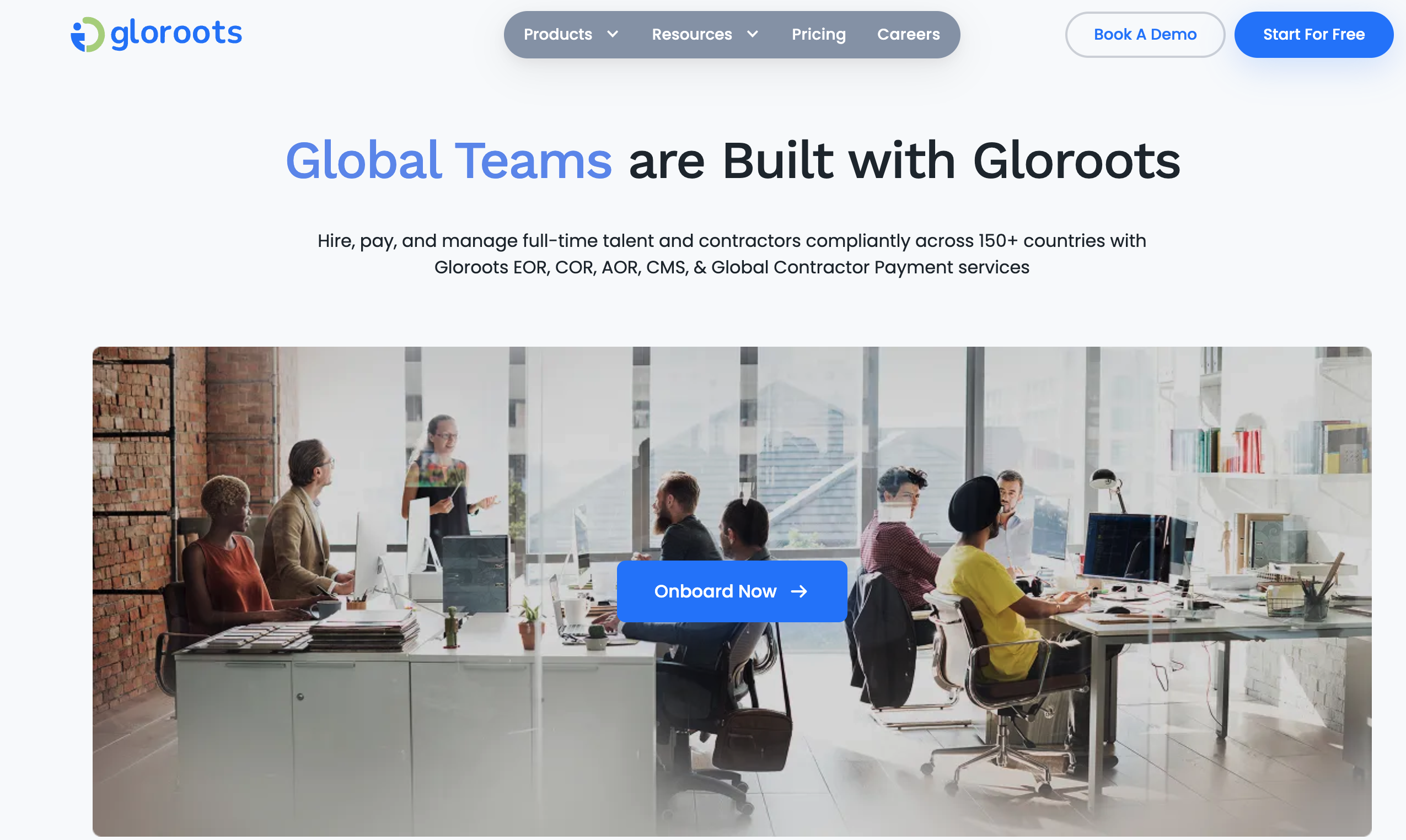
Gloroots supports compliant full-time employment across 150+ countries, including Slovakia. The platform combines four service pillars: Global Employer of Record (EOR), Global Payroll, Compliance & Employment Governance, and Benefits & Statutory Coverage.
Companies get centralized workforce visibility across all active employment relationships. Account support is human-led, with teams that retain business context across the employment lifecycle rather than routing queries through generic helpdesks.
Pricing is predictable and country-specific. Gloroots publishes full cost visibility before onboarding begins and does not use percentage-of-salary pricing. This makes budget planning straightforward for finance and operations teams managing Slovak headcount.
Strengths:
-
Covers 150+ countries under a single employment operating layer, with Global EOR, Global Payroll, Compliance & Employment Governance, and Benefits & Statutory Coverage combined in one platform.
-
Predictable, country-specific pricing with full cost visibility before onboarding and no percentage-of-salary fees, supporting accurate budget governance.
-
Human-led account support with retained business context, reducing the need to re-brief teams on each query.
Best for: Companies that need entity-free employment in Slovakia with centralized governance, predictable pricing, and human-led account ownership across a global workforce.


Atlas HXM
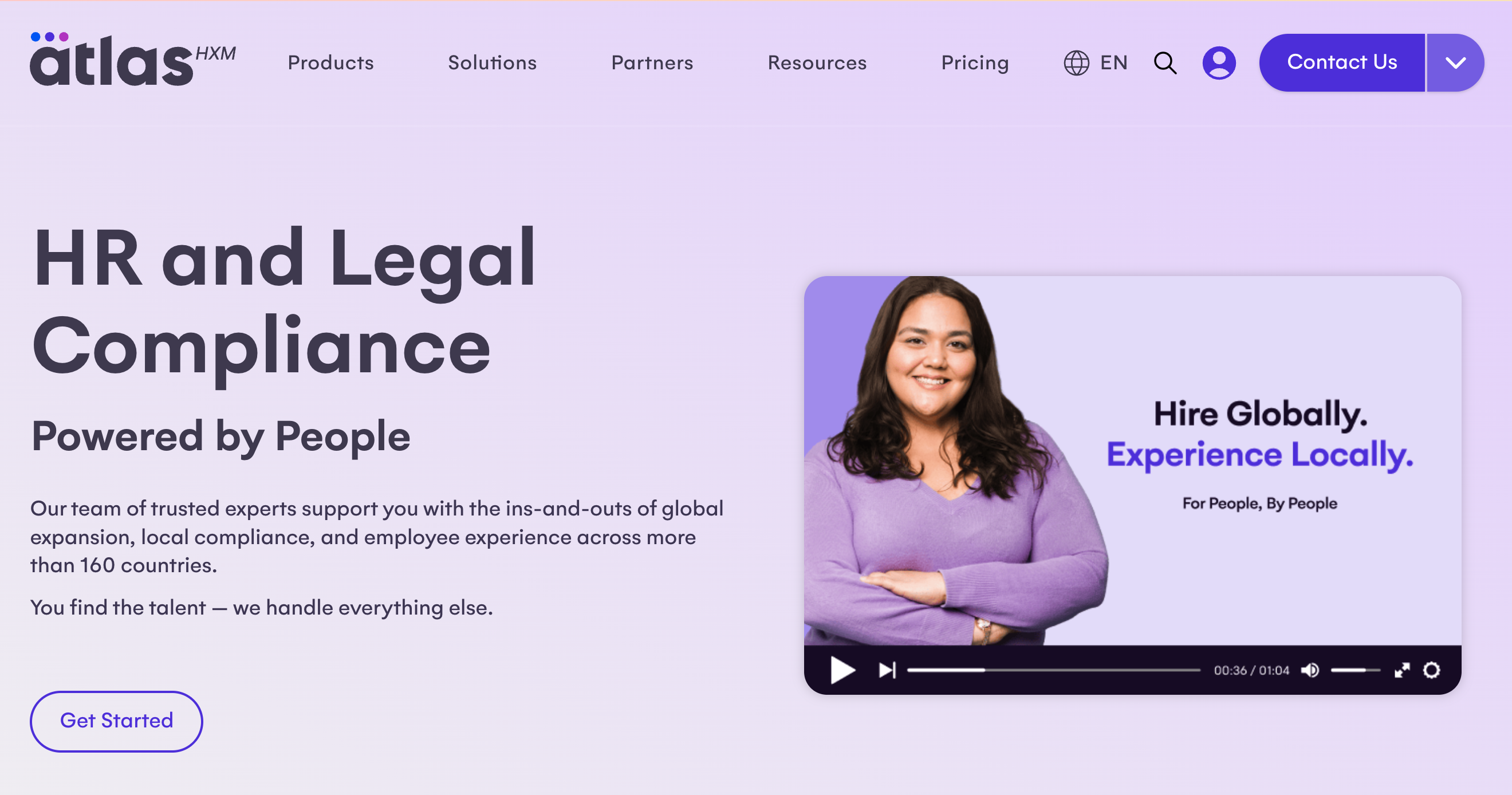
Atlas HXM operates direct legal entities in 160+ countries, including Slovakia, positioning it as a direct-model employer of record. This means Atlas acts as the legal employer through its own local entity rather than relying on third-party partners, which can reduce compliance gaps for companies with strict regulatory requirements.
Atlas covers payroll processing, Slovak Labor Code compliance, benefits administration, and employee onboarding. Its direct-entity model is a key differentiator for companies that want assurance that employment contracts, social security filings, and statutory benefits are managed by an entity with direct legal standing in Slovakia.
Strengths:
-
Direct legal entity in Slovakia supports compliance assurance without reliance on local partners.
-
Covers payroll, Slovak Labor Code requirements, benefits, and onboarding within a single platform.
Limitations:
-
Atlas HXM's direct-entity EOR model covers 160+ countries, with no Slovakia-specific limitations identified in verified public sources.
Best for: Companies prioritizing direct-entity compliance assurance when hiring employees in Slovakia.
Pricing: Atlas HXM's published starting EOR price is $599 per employee per month, though this is the global starting rate rather than a confirmed Slovakia-specific price.
Remote
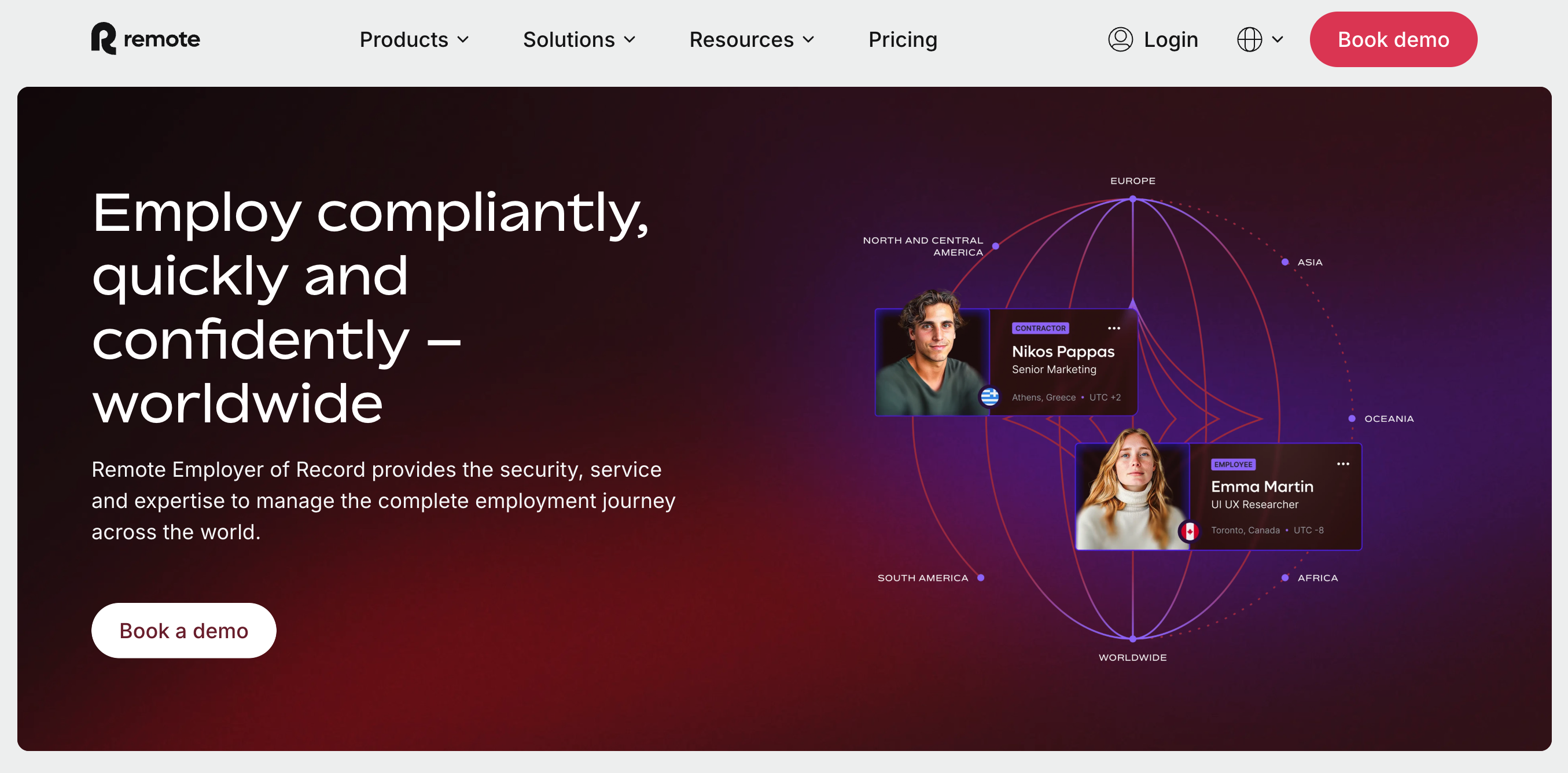
Remote is known for transparent pricing and a self-serve onboarding experience. The platform covers payroll, compliance, benefits administration, and intellectual property protection for internationally hired employees.
Remote's pricing model is publicly listed at approximately $599 per employee per month for its global EOR service. Whether this rate applies directly to Slovakia-based hires should be confirmed with Remote before contracting, as country-specific rates can vary.
Strengths:
-
Publicly listed pricing gives finance and operations teams cost visibility before committing to a contract.
-
Covers payroll, compliance, benefits, and IP protection within a single platform.
Limitations:
-
Remote notes it does not meet Slovakia’s 49‑employee threshold and is therefore not required to offer the children’s sports and recreation allowances.
Best for: Companies that value pricing transparency and prefer a self-serve onboarding process when hiring in Slovakia.
Remote states it owns its own legal entity in Slovakia and does not rely on third parties.
Globalization Partners
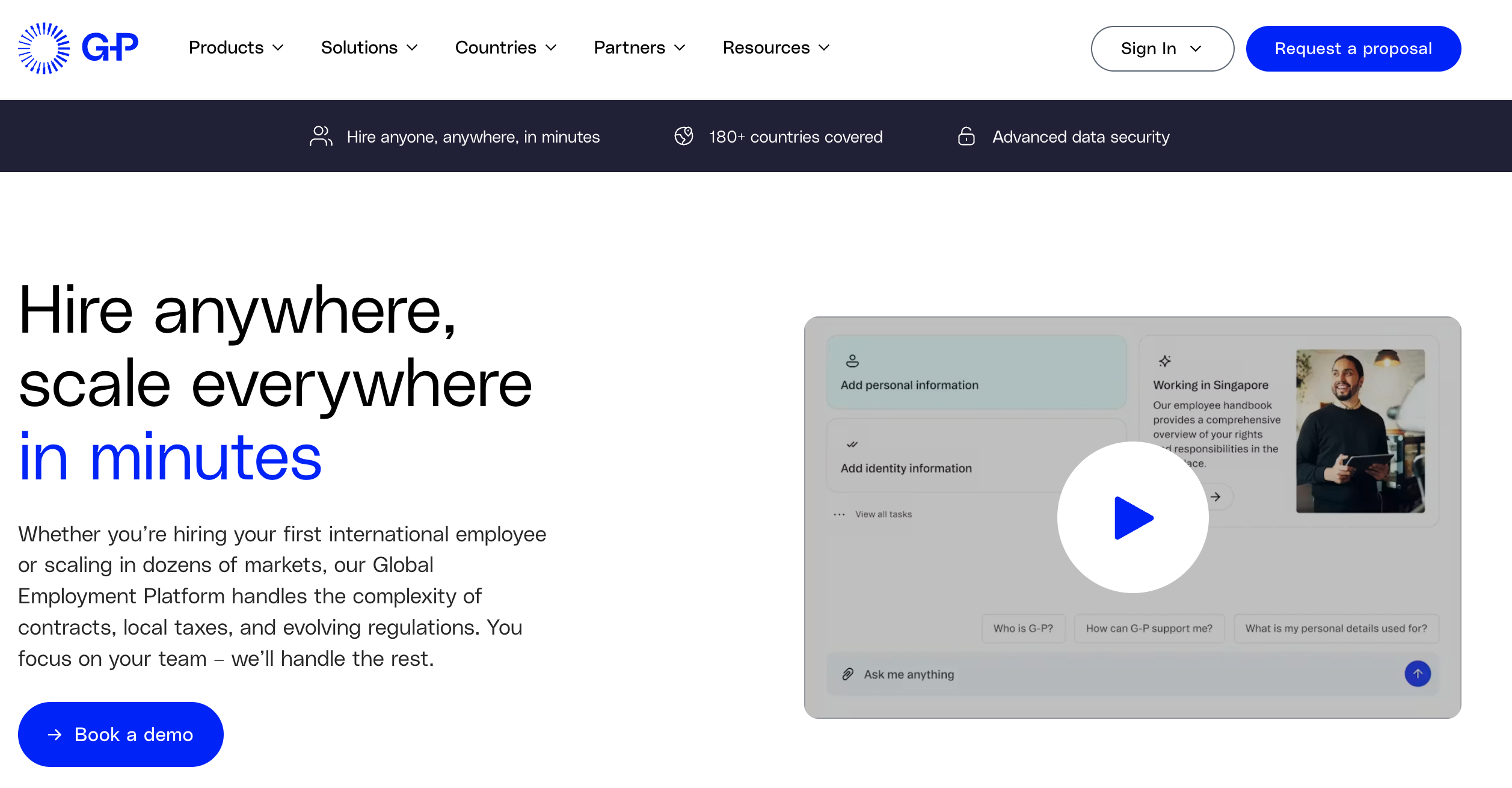
Globalization Partners (G-P) is one of the earliest employer of record providers globally. The company is known for fast employee onboarding and deep legal expertise across its covered markets, including Slovakia.
G-P manages employment contracts, payroll processing, statutory compliance, and benefits administration for Slovak employees. Companies can hire without establishing a local legal entity, with G-P acting as the legal employer of record.
Strengths:
-
One of the longest-established EOR providers globally, with recognized legal and compliance expertise.
-
Covers employment contracts, payroll, compliance, and benefits for Slovak employees under a single service.
-
G-P was recognized as the highest Leader in Everest Group’s 2024 EOR Solutions PEAK Matrix and named an EOR Leader in NelsonHall’s 2025 Global EOR Services NEAT.
Limitations:
-
Pricing is custom and not publicly listed, which makes upfront cost comparison difficult for smaller teams.
Best for:
Enterprises that require fast employee onboarding in Slovakia and want a provider with established legal expertise and a long track record in global employment compliance.
Pricing is available on request. G-P does not publish standard per-employee rates for Slovakia.
Payoneer
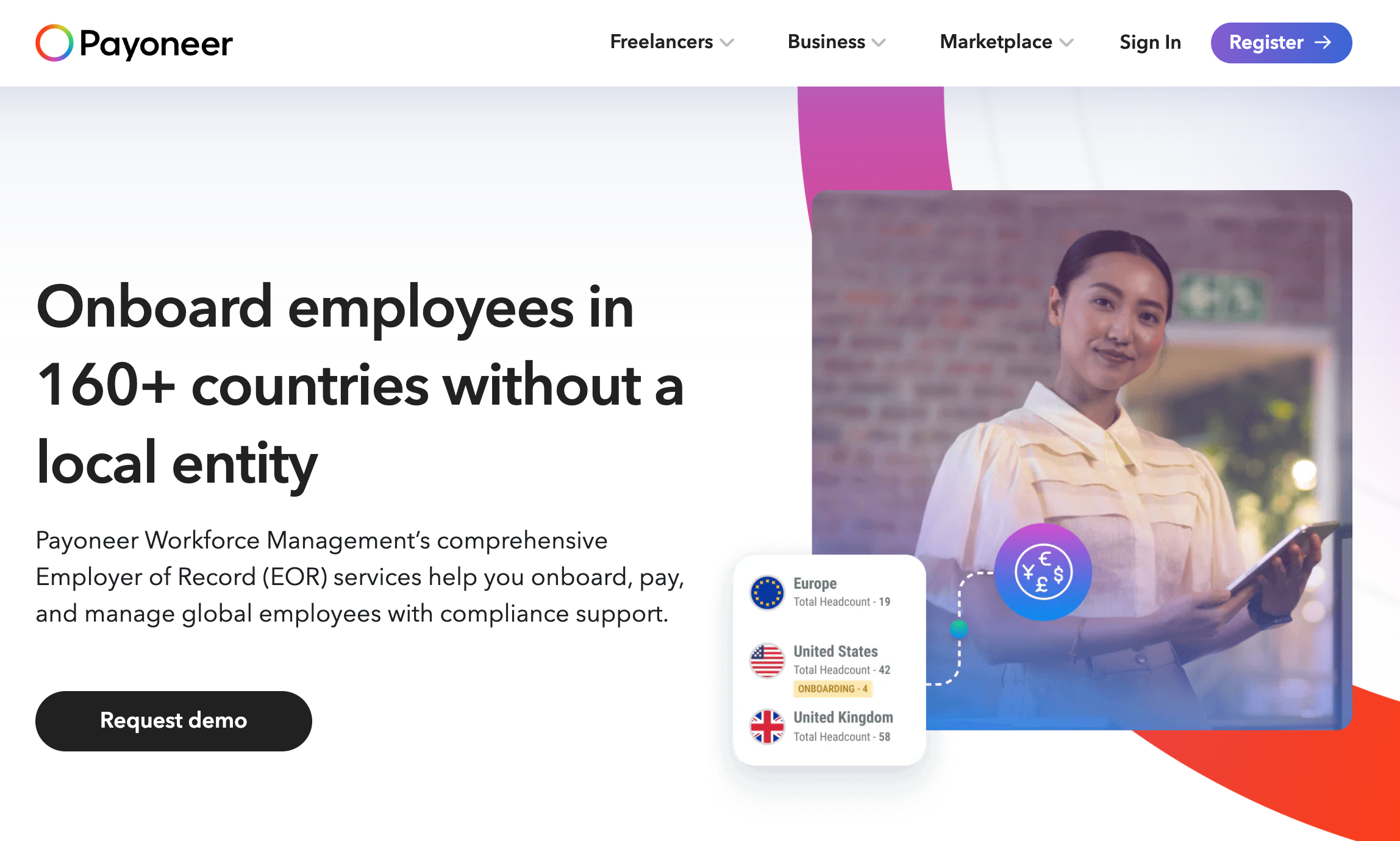
Payoneer offers EOR services in Slovakia with a platform built for flexible and scalable global hiring. The service covers payroll in EUR, Slovak statutory compliance, benefits administration, and contractor management.
Payoneer supports contractor-to-employee conversion, which is useful for companies that begin with freelance arrangements and later want to bring workers onto a compliant employment contract in Slovakia.
Strengths:
-
Supports payroll in EUR with Slovak compliance coverage, including statutory benefits and contractor management.
-
Contractor-to-employee conversion support gives SMBs and scaleups a practical path to compliant full-time employment in Slovakia.
Limitations:
-
Payoneer's Slovakia FAQ notes that an EOR “legally employs the worker through its existing Slovak entity,” indicating direct local entity coverage.
Best for:
SMBs and scaleups that want flexible Slovakia hiring with the option to convert contractors to full-time employees under a compliant employment structure.
Starting price: $399 per month
Oyster HR
Oyster HR is built for remote-first companies that want to hire internationally while keeping the employee experience central. The platform covers payroll processing, statutory benefits administration, compliance with Slovak Labor Code requirements, and remote work support for distributed teams.
Oyster HR is positioned for companies that treat employee experience as a hiring differentiator, not an afterthought. Its platform gives HR teams visibility into benefits, contracts, and payroll across multiple countries from a single interface.
Strengths:
-
Designed specifically for remote-first hiring with strong employee-facing tools and benefits visibility.
-
Covers payroll, compliance, and statutory benefits for Slovak employees within a multi-country platform.
Limitations:
-
Public sources reviewed did not document a provider-specific limitation for Oyster HR in Slovakia.
Best for: Remote-first companies hiring in Slovakia that prioritize employee experience and want a platform built around distributed workforce management.
Oyster HR does not publish a Slovakia-specific EOR starting price; its current published EOR starting price is $699 per employee/month, treated as a global starting rate. Oyster does not publicly confirm that it owns a direct legal entity in Slovakia; the company states it uses its own entity where available and trusted EOR vendors where it does not have a direct entity.
GoGlobal

GoGlobal is known for regional expertise across Central and Eastern Europe, with Slovakia covered as part of a broader CEE hiring network. The platform handles payroll, Slovak Labor Code compliance, statutory benefits, and regional coordination for companies running multi-country operations.
Companies expanding across CEE often use GoGlobal to manage Slovakia alongside neighboring markets, reducing the complexity of coordinating separate providers for each country. The platform is built around tailored EOR solutions rather than a one-size approach.
Strengths:
-
Strong CEE regional presence supports coordinated multi-country hiring with Slovakia as part of a broader expansion strategy.
-
Covers Slovak Labor Code compliance, payroll, and benefits within a regionally coordinated service model.
Limitations:
-
Public sources reviewed did not document a provider-specific limitation for GoGlobal in Slovakia.
Best for: Companies expanding across Central and Eastern Europe with Slovakia as part of a multi-country hiring strategy who need regional coordination from a single provider.
GoGlobal uses custom pricing rather than a published rate, offering a transparent monthly per-employee fee model.
Deel
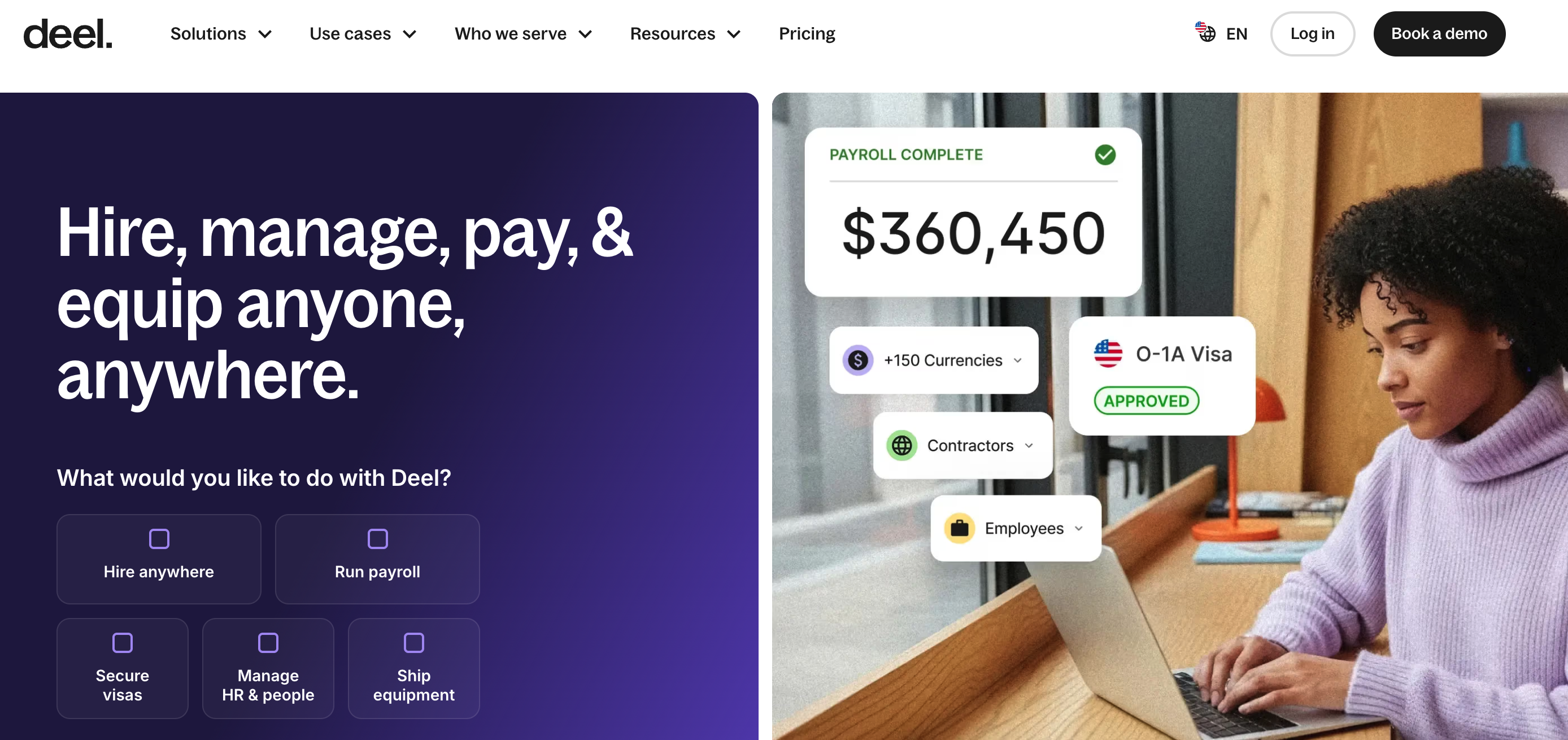
Deel is known for payroll automation, broad country coverage across 150+ countries, and a wide range of HRIS integrations. For companies hiring in Slovakia, Deel handles payroll processing, social security filings, contractor management, and contractor-to-employee conversion.
The platform supports automated payroll runs and connects with tools such as Slack, Rippling, and major HRIS systems, which makes it a practical option for tech teams managing distributed workforces.
Strengths:
-
Payroll automation with broad integration support across HRIS and productivity tools, suited to tech-forward teams.
-
Contractor-to-employee conversion capability, allowing companies to transition workers in Slovakia without starting a new engagement from scratch.
-
Wide country coverage supporting multi-country payroll alongside Slovakia operations.
Limitations:
-
Deel’s immigration support in Slovakia is “Only your entity,” meaning visa/work authorization is handled only when the client has its own Slovak entity, not via Deel EOR.
Best for: Tech companies that need strong third-party integrations and contractor-to-employee conversion when hiring in Slovakia.
Deel's published EOR pricing starts at approximately $599 per month. Slovakia applicability at that rate should be confirmed directly with Deel before contracting. G2 and Trustpilot ratings are publicly listed but were not included in the sources reviewed for this page.
What Are the Key Services of an EOR in Slovakia?
An EOR in Slovakia covers the full employment lifecycle, from pre-hire compliance through offboarding. Each service area is shaped by Slovak-specific regulations, including the Labor Code, mandatory social security contributions, and health insurance requirements.
Core services typically include:
-
Payroll processing in EUR with automated social security and health insurance filings under Slovak authority rules.
-
Employment contract drafting that meets Slovak Labor Code requirements, including notice periods and fixed-term rules.
-
Benefits administration covering statutory annual leave, public holidays, sick leave, and meal vouchers.
-
EU posting compliance, including A1 certificate management for cross-border assignments.
-
Offboarding support that follows Slovak redundancy procedures and termination notice requirements.
Providers that maintain in-country infrastructure or dedicated Slovak compliance teams are better positioned to manage regulatory changes as they occur, rather than applying generic global templates to local requirements.
Employment Contracts and Local Compliance
Slovak law requires all employment contracts to be in writing and drafted in Slovak, or in a bilingual format. This is a mandatory requirement under the Slovak Labor Code, not a formality.
Probationary periods are capped at three months for standard roles. For executives who report directly to a statutory body, the cap extends to six months. Probationary periods cannot be extended once set, and renewed fixed-term contracts cannot include a new probationary period.
Slovakia's employment framework also aligns with EU employment directive requirements, which adds a layer of cross-border compliance obligations for companies hiring internationally. An EOR manages contract drafting, language requirements, and probation rules from day one.
Payroll and Tax Administration
Slovakia operates a monthly payroll cycle. Employees contribute 13.4% of gross salary to social security, while employers carry a separate contribution obligation on top of that.
Personal income tax applies at 19% on income up to 176.8 times the applicable minimum wage threshold. Income above that level is taxed at 25%. Employees also benefit from a non-taxable portion of the tax base, an annual figure set by Slovak tax authorities that reduces the amount of income subject to tax. This figure is reviewed periodically and subject to change.
At year end, employers run an annual tax reconciliation to confirm withholding accuracy. Meal vouchers are a standard Slovak benefit: the employer contribution toward meal vouchers is partially tax-deductible, which affects how payroll costs are calculated and reported each month.
Benefits Administration
Slovak employers are required to contribute to meal vouchers at a minimum of 55% of the voucher value. This is a statutory floor, and most employers meet or exceed it to stay competitive.
Beyond meal vouchers, market-standard benefits in Slovakia include contributions to the third-pillar supplementary pension scheme (doplnkove dochodkove sporenie) and private health insurance. These additions are common among employers competing for skilled talent in Bratislava and other major Slovak cities.
A 13th-month payment is not required by Slovak law. Where it exists, it is a contractual or company-policy arrangement, not a statutory entitlement. Gloroots manages benefits administration as part of its Benefits and Statutory Coverage service, tracking both mandatory contributions and agreed contractual benefits for each employee.
Employee Onboarding
Onboarding a Slovak employee through an EOR involves four core registration steps: signing the employment contract, registering with the Social Insurance Agency, registering with a Slovak health insurance provider, and registering with the Slovak Financial Administration for tax purposes.
For EU nationals, this process typically completes within one to two weeks. Non-EU nationals require work authorization before employment can begin, which extends the timeline depending on permit type and processing times.
Gloroots supports work permit applications for non-EU nationals as part of its Employment Lifecycle Management service. The platform handles digital onboarding and provides centralized visibility into each employee's registration status, so HR teams can track progress without managing Slovak authorities directly.
Ongoing HR Support
An EOR in Slovakia provides ongoing HR support that extends well beyond initial onboarding. This includes monitoring updates to the Slovak Labor Code, tracking salary review compliance, and managing statutory leave records throughout the employment lifecycle.
Annual tax reconciliation is a core part of this support. The EOR prepares and submits required filings to the Slovak tax authority and ensures employee tax positions are correctly settled at year end.
Slovak labor inspectorate requirements add another layer of obligation. The EOR manages documentation and reporting to meet inspectorate standards, reducing direct compliance exposure for the client company.
Labor Code update monitoring and salary review compliance
Leave tracking and statutory reporting obligations
Annual tax reconciliation and year-end filings
Labor inspectorate documentation and reporting
-
Payroll change management covering salary adjustments, promotions, and role changes
Employee relations issues are handled within the framework of Slovak law. When disputes or grievances arise, the EOR supports resolution in line with statutory requirements, keeping the employment relationship properly governed throughout.
Employee Offboarding
Termination in Slovakia is classified as difficult under the Slovak Labor Code. Employer protections are strong, and dismissal requires valid grounds: organizational reasons, documented performance issues, or conduct-related causes.
Notice periods are set by length of service. Employees with less than one year of service receive one month of notice. Those with one to five years receive two months, and employees with more than five years receive three months. These figures should be verified against the current Labor Code text before use in employment contracts.
Statutory severance pay applies based on tenure, with multipliers increasing for longer-serving employees. Redundancy procedures follow defined steps, and any deviation creates legal risk for the employing entity.
-
Valid dismissal grounds: organizational, performance, or conduct-based
Notice period tiers by length of service (1, 2, or 3 months)
Statutory severance pay multipliers tied to tenure
Defined redundancy procedure steps
Final payroll settlement and termination documentation
The EOR manages all termination documentation, coordinates final payroll settlement, and ensures the process meets Slovak Labor Code requirements. This reduces legal exposure and keeps the offboarding process properly governed from notice through to final payment.
How to Hire Through an EOR in Slovakia
Hiring through an EOR in Slovakia does not require a local limited liability company or any other legal entity. The EOR acts as the legal employer, covering both EU and non-EU nationals under Slovak labor law.
The process applies equally whether you are hiring a Slovak citizen, an EU national working in Slovakia, or a non-EU national with the appropriate work authorization. From provider selection through to the employee's first day, the total timeline typically runs three to five weeks, depending on role complexity and document readiness.
Selection and Setup
Start by defining the role, compensation structure, and employment type. Slovak law permits both fixed-term and indefinite contracts, and the choice affects notice period obligations and renewal limits under the Labor Code.
Select a provider based on direct entity presence in Slovakia, compliance depth, pricing transparency, and support model. Providers without a local entity may rely on third-party arrangements, which can introduce compliance gaps.
Once selected, sign a master services agreement and a data processing agreement. Because Slovakia is an EU member state, a data processing agreement is a GDPR requirement before any employee personal data is shared.
-
Step 1: Define role, compensation, and employment type (fixed-term or indefinite).
-
Step 2: Evaluate providers on entity presence, compliance record, pricing, and support.
-
Step 3: Execute the master services agreement and GDPR-compliant data processing agreement.
-
Step 4: Share employee details and confirm contract terms with the provider.
Selection and setup typically takes one to two weeks. Onboarding begins once agreements are signed and employee information is verified.
Onboarding and Compliance
EOR onboarding in Slovakia follows a structured sequence that keeps employment legally sound from day one.
-
The EOR drafts an employment contract compliant with the Slovak Labor Code, including notice periods and probationary terms.
-
The employee signs the contract. The EOR registers the employee with the Social Insurance Agency and the relevant health insurance provider.
-
The EOR completes tax registration with the Financial Administration of the Slovak Republic.
Payroll is configured and the first payroll run is executed.
-
Ongoing compliance monitoring begins, covering social security filings, tax obligations, and Labor Code requirements.
Probationary periods are capped at three months for standard roles. For non-EU nationals, work permit processing adds approximately four to eight weeks to the overall timeline, so planning ahead reduces delays.
Most providers listed in this guide offer digital onboarding tools that allow employees to complete documentation, sign contracts, and confirm registrations without in-person steps.
What Are the Benefits of Using an EOR in Slovakia?
Using an EOR in Slovakia gives companies a faster, lower-risk path to employment without registering a local legal entity. The benefits span speed, compliance, cost control, and workforce flexibility.
Speed is the most immediate advantage. An EOR can employ a Slovak worker in one to two weeks, compared to the months required to incorporate a local limited liability company and complete all registrations.
Compliance coverage is equally significant. Slovak employment law includes strict Labor Code protections, mandatory social security contributions, health insurance obligations, and EU posting rules. An EOR manages all of these on your behalf, reducing the risk of penalties or disputes.
Cost predictability matters for finance teams. EOR pricing is typically a fixed monthly fee per employee, which makes budgeting straightforward compared to the variable costs of entity setup and local HR infrastructure.
Flexibility is especially relevant for companies testing the Slovak market before committing to a permanent entity. An EOR lets you hire, scale, and exit without long-term structural obligations. If the market proves viable, transitioning to a local entity remains an option. To understand how employer of record cost compares to entity setup, the difference is often significant in the first one to two years of operations.
Faster Market Entry
An EOR lets companies hire in Slovakia within one to two weeks. Incorporating a Slovak limited liability company through the Commercial Register typically takes four to eight weeks, and that timeline does not include the time needed to understand local registration requirements.
With an EOR, there is no entity setup. The EOR is already the legal employer, so your company can place workers in Bratislava, Košice, Žilina, or Nitra without waiting on registration approvals or navigating Slovak corporate law.
This speed matters when a project opportunity opens or a strong candidate is available for a limited time. Entity-free employment through an EOR removes the structural delay between deciding to hire and actually employing someone in Slovakia.
Reduced Compliance Risk
An EOR assumes legal employer liability for Slovak Labor Code compliance. That means the EOR, not your company, is responsible for correct social security filings, proper employment contracts, and lawful termination procedures.
Slovakia's labor inspectorate enforces employment law and can issue fines for non-compliance. Misclassifying workers or filing social security contributions incorrectly exposes companies to financial penalties that accumulate quickly, particularly for businesses unfamiliar with Slovak employment rules.
-
Social security and health insurance filings are managed and submitted by the EOR.
-
Employment contracts follow Slovak Labor Code requirements, including notice periods and trial period rules.
-
GDPR obligations are handled by the EOR acting as a data processor.
For companies entering Slovakia without prior experience in Central European employment law, transferring this liability to an EOR reduces the risk of costly errors across the full employment lifecycle.
Simplified Payroll Administration
An EOR in Slovakia takes full ownership of EUR payroll processing, removing the need for in-house Slovak payroll expertise on your team.
The EOR files mandatory employer social security contributions at 35.2%, manages the 14% health insurance obligation, and withholds income tax on each monthly payroll cycle. All filings go directly to the relevant Slovak authorities.
-
Monthly payroll processing with automated social security and health insurance filings
Income tax withholding calculated and remitted each pay period
-
Annual tax reconciliation handled by the EOR on behalf of employed workers
-
Centralized reporting for finance teams managing multi-country payroll
Gloroots runs this through its Global Payroll and Compliance & Employment Governance infrastructure, giving finance teams full cost visibility and reducing the administrative load across every pay cycle.
Access to Local Benefits
A Slovakia EOR administers the full set of statutory benefits required under Slovak labor law, so employees receive their entitlements without any gap in coverage.
Statutory minimums include at least 20 days of paid annual leave (increasing with tenure), 15 public holidays, sick leave, and maternity and paternity leave. Meal voucher administration is also included, with the employer contributing a minimum of 55% of the voucher value.
-
Statutory annual leave, public holidays, and sick leave managed and tracked
-
Maternity and paternity leave administered in line with Slovak Labor Code requirements
-
Meal voucher program with employer contribution handled by the EOR
-
Access to market-standard supplemental benefits including third-pillar pension and private health insurance
A competitive benefits package matters in Slovakia's IT, automotive, and shared services sectors, where talent competition is strong. Gloroots delivers Benefits & Statutory Coverage as part of its employment operating layer, giving employers a complete package without building local benefits infrastructure from scratch.
Lower Entity Setup Costs
Setting up a Slovak limited liability company requires a minimum share capital of $5,808 (€5,000), plus notary fees, Commercial Register filing costs, and ongoing entity maintenance. Total setup costs typically range from $3,485 (€3,000 to €8,000).
An EOR removes all of those costs. Monthly fees generally run $407 (€350 to €700) per employee, covering payroll, social security, health insurance, and compliance. For companies hiring fewer than approximately five employees in Slovakia, this is the more cost-effective path.
There is no need for a local director or a registered office. Companies pay a predictable monthly fee and avoid the fixed overhead of maintaining a Slovak entity. Gloroots uses predictable, country-specific pricing with full cost visibility before onboarding and no percentage-of-salary charges.
More Flexible Workforce Scaling
An EOR lets companies scale headcount in Slovakia up or down without restructuring a legal entity. There are no winding-up procedures, no shareholder resolutions, and no long-term overhead if business needs change.
This matters most for project-based hiring, seasonal demand, or initial market testing. Companies in Slovakia's automotive, IT, and shared services sectors often face variable headcount requirements that a fixed entity structure cannot accommodate efficiently.
-
Convert Slovak contractors to full-time employees without entity setup.
-
Add or reduce headcount without triggering entity restructuring obligations.
-
Test the Slovak market before committing to a permanent legal presence.
Gloroots supports this kind of workforce governance through its EOR services, giving companies centralized visibility and human-led account support as their Slovak teams grow or contract.

How to Find the Right EOR for Slovakia
Choosing the right EOR for Slovakia requires evaluating five key dimensions: local compliance expertise, payroll accuracy, contract management, benefits administration, and support quality.
Of these, the most critical differentiator is whether the provider holds a direct legal entity in Slovakia. Providers that rely on partner networks or aggregator models introduce an additional layer of risk, slower response times, and reduced accountability for Slovak Labor Code compliance. A direct entity means the provider is the legal employer of record, not a subcontracted third party.
Each criterion below helps you assess whether a provider can genuinely support compliant employment in Slovakia, not just claim coverage of the country.
Local Compliance Expertise
Verify that the provider holds a direct legal entity in Slovakia, not a partner or aggregator arrangement. This distinction determines who is legally accountable for payroll filings, social security contributions, and labor inspectorate compliance.
Assess the provider's depth of knowledge across the Slovak Labor Code, the social security system, and mandatory health insurance requirements. Providers should demonstrate experience with Slovak-specific employment scenarios, including probationary periods, notice period rules, termination procedures, and redundancy processes.
For companies with cross-border operations, EU posting capability matters. Confirm the provider can manage A1 certificates and posted worker regulations, which are required for employees temporarily working across EU member states from Slovakia.
Clear Service Scope
Before signing with any EOR provider in Slovakia, confirm exactly what the monthly fee covers and what is billed separately.
Key questions to ask:
-
Does the fee include work permit support, benefits administration, and offboarding, or are these charged as add-ons?
-
Are both fixed-term and indefinite employment contracts supported under Slovak Labor Code?
-
Is contractor or agent-of-record (AOR) management available if your workforce includes independent contractors?
-
Is a GDPR-compliant data processing agreement provided as standard, not on request?
-
Does the provider support IP assignment and confidentiality agreements governed by Slovak law?
Providers that bundle these services into a single predictable fee reduce administrative overhead and compliance risk. Gloroots uses country-specific pricing with full cost visibility before onboarding and no percentage-of-salary pricing, so the scope of services is clear from the start.
Support Model
The quality of support often determines how well an EOR performs when problems arise, not just during routine payroll runs.
Evaluate each provider on these points:
-
Does the provider assign a dedicated account manager or route requests through a shared support pool?
-
Are support hours and response time commitments aligned with Slovakia's CET/CEST time zone?
-
Does the support team include in-country Slovak HR and legal specialists, or does it rely on remote generalists?
-
Is Slovak-language support available for employees who need direct assistance?
-
Is there a defined escalation process for complex situations such as terminations, labor disputes, or labor inspectorate inquiries?
Gloroots provides human-led account support with retained business context, meaning the same team handles your account over time rather than reassigning cases to whoever is available. This matters most when Slovak compliance questions require institutional knowledge of your workforce.
Technology and Reporting
A strong EOR platform gives you real-time visibility into payroll runs, compliance status, and employee records without requiring manual follow-up.
When evaluating technology, confirm the platform shows Slovak-specific breakdowns: social security contributions, health insurance filings, and income tax per employee. Generic payroll summaries are not sufficient for audit or finance reporting.
-
Real-time dashboards covering payroll, social security, and health insurance per employee
-
Integration with common HRIS and accounting tools such as SAP, Workday, and QuickBooks
-
Document storage for Slovak employment contracts, amendments, and termination letters
-
Mobile accessibility and a self-service employee portal for day-to-day requests
Gloroots provides centralized workforce visibility through a live dashboard that tracks payroll and compliance metrics. Human-led account support retains business context across your Slovak workforce, reducing the need to re-explain requirements each reporting cycle.
Scalability for Your Hiring Plans
Your EOR provider should support your hiring plans at every stage, from a single employee in Bratislava to a team of 50 or more across Slovakia and the wider Central European region.
Confirm the provider can onboard multiple employees simultaneously without service delays. If Slovakia is part of a broader expansion into Poland, Czech Republic, or Hungary, multi-country capability matters from day one.
-
Capacity to scale from one employee to 50 or more in Slovakia without degraded service
-
Multi-country support for coordinated Central and Eastern European expansion
-
Support for entity setup transition if headcount grows beyond EOR cost-effectiveness thresholds
-
Per-employee flat-fee pricing rather than percentage-of-salary models, which become unpredictable at scale
Gloroots uses predictable, country-specific pricing with full cost visibility before onboarding and no percentage-of-salary pricing. The platform supports companies from EOR for small business through EOR for enterprises, covering growth across 150 or more countries without requiring a separate contract structure at each stage.

Why Gloroots Is a Strong EOR Partner in Slovakia
Gloroots supports compliant full-time employment across 150+ countries, including Slovakia, through a single employment operating layer that covers Global Employer of Record (EOR), Global Payroll, Compliance & Employment Governance, and Benefits & Statutory Coverage.
For Slovakia specifically, Gloroots manages full Slovak Labor Code compliance, social security contributions, health insurance filings, and EU posting support. Companies can employ Slovak workers without registering a local entity.
Pricing is predictable and country-specific. Gloroots provides full cost visibility before onboarding begins and does not use a percentage-of-salary model. All fees are itemized upfront, so finance teams can plan headcount costs without surprises.
-
Full Slovak Labor Code compliance, including notice periods and fixed-term contract rules
Social security and health insurance contribution management
EU posting support and A1 certificate coordination
Centralized workforce visibility across all active countries
Human-led account support with retained business context
Onboarding in Slovakia typically completes within one to two weeks. A 24/7 human support model means account teams are available across time zones, not routed through automated queues.
Companies entering Slovakia for the first time or expanding a Central and Eastern European presence can use Gloroots EOR services to run employment without entity setup. For a full breakdown of costs, see Gloroots pricing.
FAQs About the Best EOR in Slovakia
The questions below address the most common topics buyers raise when evaluating EOR providers for Slovakia. Each answer is grounded in the Slovak Labor Code and current regulatory requirements.
What does an EOR in Slovakia legally handle?
The EOR acts as the legal employer. It manages employment contracts, payroll, social security contributions (35.2% employer portion), health insurance (14%), statutory leave, and termination procedures under the Slovak Labor Code.
Do I need a local entity to hire in Slovakia?
No. An EOR employs workers on your behalf, so you can hire in Slovakia without registering a local company.
How long does onboarding take with a Slovakia EOR?
Most providers complete onboarding within one to two weeks, depending on document readiness and contract complexity.
What notice periods apply under Slovak law?
The Slovak Labor Code requires a minimum notice period of one to two months, depending on the employee's length of service.
Can an EOR support EU posted workers in Slovakia?
Yes. EOR providers with EU posting expertise manage A1 certificates and cross-border compliance obligations for internationally assigned workers.
How does an EOR work in Slovakia?
An EOR acts as the legal employer for your Slovak workers. Your company directs day-to-day work, while the EOR holds the employment relationship under Slovak law.
The EOR registers each employee with the Social Insurance Agency (Sociálna poisťovňa), a health insurance provider, and the Slovak tax authority. These registrations are required before the employee starts work.
Each month, the EOR processes payroll in EUR, withholds income tax, and remits employer social security and health insurance contributions on your behalf. Your company does not need a Slovak legal entity to employ workers this way.
Responsibility for Labor Code compliance sits with the EOR, not the client company. That includes employment contracts, notice periods, and statutory benefits.
What does an EOR cost in Slovakia?
EOR fees for Slovakia typically range from approximately $407 (€350 to €700) per employee per month on a flat-fee model. Some providers use custom or enterprise pricing instead.
The EOR fee is only part of the total cost. Employers also pay social security contributions of 35.2% and health insurance of 14% on top of gross salary. For a worker earning $2,323 (€2,000) gross per month, employer contributions add roughly $1,143 (€984), bringing the total employment cost to approximately $3,466 (€2,984) plus the EOR fee.
When comparing providers, request an itemized quote. Confirm which services are included, such as payroll processing, contract management, and benefits administration, so you can compare costs accurately. For more detail on how fees are structured, see our guide on employer of record cost.
Gloroots uses predictable, country-specific pricing with full cost visibility before onboarding and no percentage-of-salary pricing.
When should a company use an EOR in Slovakia?
An EOR works well when a company wants to test the Slovak market without committing to a local entity, hire one to five employees, or enter quickly without local HR or legal expertise.
An EOR also suits companies converting Slovak contractors to compliant full-time employees.
-
Use an EOR for small headcount, fast entry, or limited local compliance capacity.
-
Consider entity setup when hiring ten or more employees long-term, or when EOR costs exceed entity maintenance costs.
-
Setting up a Slovak limited liability company takes four to eight weeks and requires a minimum share capital of $5,808 (€5,000).
Can an EOR hire both local and foreign employees in Slovakia?
Yes. An EOR can employ both Slovak nationals and foreign nationals working in Slovakia.
EU and EEA nationals do not need a work permit. The EOR handles standard employment registration for them.
-
Non-EU nationals require a work permit, a residence permit, or both. Some EOR providers offer immigration advisory or work permit sponsorship support.
-
The EU Blue Card is available in Slovakia for highly qualified non-EU nationals who meet eligibility criteria.
Confirm the scope of work permit support with your chosen provider before engaging, as coverage varies across EOR platforms.
How do I choose the right EOR in Slovakia?
Start by confirming whether the provider operates a direct legal entity in Slovakia or relies on a partner network. A direct entity reduces compliance risk and gives you clearer accountability for Slovak Labor Code obligations.
Request an itemized service scope, written GDPR and data processing agreement confirmation, and an onboarding timeline SLA before signing. Ask for reference clients in Slovakia or the broader CEE region.
-
Verify Slovak Labor Code expertise, including notice periods, redundancy procedures, and social security filings.
-
Confirm pricing is transparent and fixed, not calculated as a percentage of salary.
-
Assess support model quality: dedicated account ownership matters for complex compliance questions.
-
Check scalability from your current headcount to your growth target.
Use the comparison table earlier in this article to evaluate providers side by side. Consider running a pilot with one employee before committing to a full rollout.