




.webp)

- Geographic depth beats breadth: Owned entities in your strategic markets (India, Brazil, UK) deliver better compliance and faster payroll than partner networks across 160+ countries you'll never use
- Support quality shows up during crises: Test how providers handle urgent terminations and payroll exceptions—ticket-based systems with 48-hour SLAs become expensive when you need same-day answers
- Invoice transparency matters for finance teams: Black-box consolidated billing creates reconciliation nightmares at month-end. Demand line-item breakdowns with GL mapping before you scale past 50 employees
- Match the provider to your expansion strategy: Testing markets needs different tools than building permanent GCCs. Gloroots excels at India operations, Deel speeds up contractor conversions, and Remote protects IP for tech companies
- Pricing models reveal priorities: Fixed transparent rates (Gloroots at $199, Remofirst at $199) versus custom enterprise pricing (Papaya, Velocity) signal whether the platform serves your company's stage and budget reality
WorkMotion handles the basics well enough. But as your team scales past 50 employees or your compliance stakes rise, "good enough" starts showing cracks.
This analysis compares the best 10 WorkMotion alternatives based on how they perform during the moments that matter: terminations gone sideways, payroll exceptions at month-end, and audit prep when your CFO needs answers yesterday.
Our evaluation considered:
- Direct feedback from HR leaders managing 50+ international employees
- Comparative analysis of contract terms, invoice transparency, and termination processes
- Hands-on assessment of platform usability during onboarding, payroll cycles, and offboarding scenarios
Gloroots is included in this comparison as we operate in the same category and serve similar buyer profiles.
Our goal is to help you choose the right EOR partner for your risk tolerance, growth trajectory, and compliance standards, regardless of which platform you ultimately select.
What Is WorkMotion?
WorkMotion is a Germany-based Employer of Record helping companies hire and manage employees across 160+ countries without establishing local entities. The platform primarily serves European mid-market companies expanding internationally, particularly those prioritizing GDPR compliance and EU-centric operations.
WorkMotion is commonly used for managing distributed teams in Europe, MENA, and select APAC markets, handling employment contracts, payroll, benefits administration, and statutory compliance through their network.
Key Features of WorkMotion
- European entity infrastructure: WorkMotion operates owned entities across major EU markets, reducing reliance on third-party partners for core European hiring needs and compliance delivery.
- GDPR-native platform architecture: Built from the ground up with European data protection standards, offering data residency controls that appeal to privacy-conscious organizations operating under strict regulations.
- Integrated HR workflow automation: Combines EOR services with time tracking, leave management, and document storage in a unified interface designed for teams managing hybrid employment models.
- Multi-currency payroll processing: Handles salary payments in local currencies with transparent foreign exchange handling and consolidated invoicing across multiple countries for simplified accounting reconciliation.
- Dedicated country specialists: Assigns regional compliance experts familiar with local labor law nuances, particularly valuable for navigating complex termination procedures or unique benefit structures in specific jurisdictions.
When to Consider a WorkMotion Alternative
Teams typically explore alternatives when their workforce footprint extends beyond WorkMotion's core strength regions or when compliance depth becomes more critical than country coverage. Here's where the platform shows limitations:
- Pricing scalability issues: Per-employee fees feel disconnected from reality as headcount grows, especially in lower-cost markets where the monthly charge exceeds local salary benchmarks
- Limited customization: Standardized approach creates friction for mature companies needing granular control over benefits design, payroll timing, or contractor-to-employee conversions
- Support responsiveness: Response times degrade during exceptions. When you're managing a termination in France or fixing a payroll error in Brazil, waiting 48 hours for ticket responses becomes expensive
- Geographic gaps: Lacks depth outside core European markets, particularly in India, Brazil, or Southeast Asia, where compliance expertise and support responsiveness trail specialized providers
One VP of Global Operations noted: "WorkMotion handled our steady-state operations fine, but when we needed to restructure our India team quickly, the lack of in-country legal resources created delays we couldn't afford."
Top 10 WorkMotion Alternatives to Consider
1. Gloroots
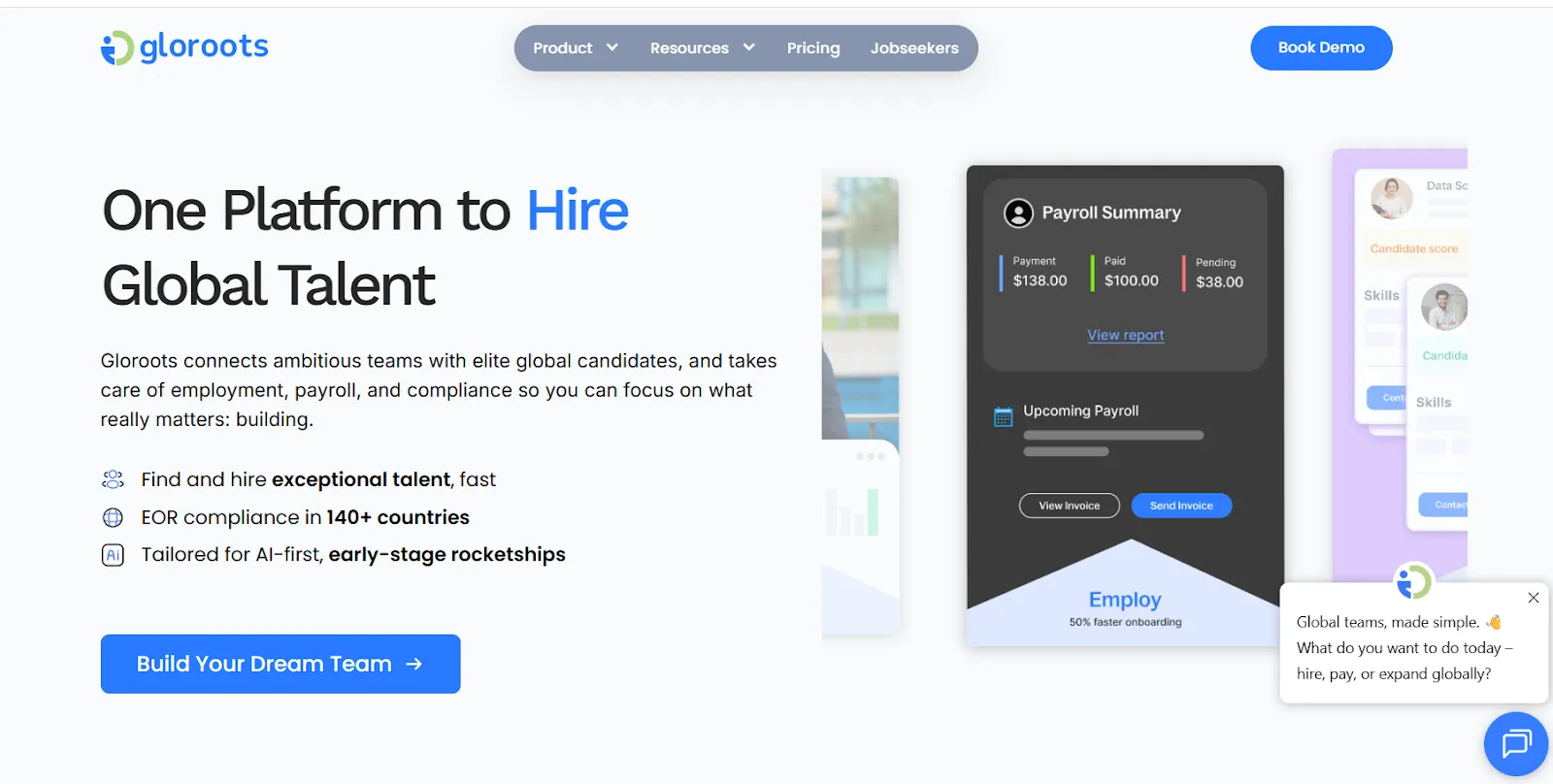
Gloroots is a global employment platform specializing in India GCC establishment and compliance-first EOR services across 100+ countries for companies scaling international operations. The platform serves HR leaders and finance teams at mid-market companies who need transparent invoicing, dedicated compliance support, and flexible entity models beyond pure EOR arrangements.
What differentiates Gloroots is the hybrid approach: combining self-service platform capabilities with assigned Customer Success Managers and in-country legal entities, particularly valuable for teams establishing Global Capability Centers in India.
Key Features
-
India GCC acceleration services: End-to-end support for
setting up Global Capability Centers, including PF/ESIC/gratuity management,
statutory filings, and local HR advisory beyond standard EOR coverage.
-
Contractor-to-employee conversion workflows: Smooth
transition paths from contractor engagement to full employment without
disrupting operations, addressing a common compliance gap in rapid scaling
scenarios.
-
Line-item invoice transparency: Detailed country-level cost
breakdowns with GL mapping and accounting exports, eliminating the black-box
invoicing that creates reconciliation headaches for finance teams.
-
Managed service + platform model: Self-service dashboard
for routine tasks backed by dedicated CSMs who handle exceptions, compliance
questions, and strategic guidance throughout the employee lifecycle.
Customer Review
"Gloroots gave us visibility into India payroll costs we never had with our previous EOR—their invoicing made budget forecasting actually possible for our GCC expansion." (Director of Finance, B2B SaaS Company)
Pros
- India specialization provides depth in PF/ESIC compliance, compensation benchmarking, and talent advisory that generic global platforms can't match for GCC establishment scenarios
- Transparent pricing at $199 per employee monthly, with a clear cost breakdown,s eliminates surprise fees common with other EOR providers
- Dedicated Customer Success Managers reduce time-to-resolution for payroll exceptions compared to ticket-based support systems
Cons
- Smaller country footprint than Oyster or Deel means some emerging markets require partner network coverage rather than owned entities
- The platform lacks native performance management or HRIS features found in all-in-one solutions like Atlas
- Limited brand recognition compared to Deel or Remote may require additional internal selling for procurement teams
Why Choose Gloroots Over WorkMotion?
- India GCC infrastructure: Gloroots provides entity setup acceleration, PF/gratuity management, and local recruiting support that WorkMotion treats as generic EOR countries
- Invoice transparency for finance teams: Line-item breakdowns with accounting exports eliminate the reconciliation friction that WorkMotion's consolidated invoicing creates
- Managed service responsiveness: Dedicated CSMs handle exceptions faster than WorkMotion's regional support model, particularly during terminations or benefit enrollment problems
Pricing
Gloroots pricing starts at $199 per employee per month with no setup fees, including contract management, payroll, benefits administration, and compliance coverage with a transparent cost structure.
2. Deel
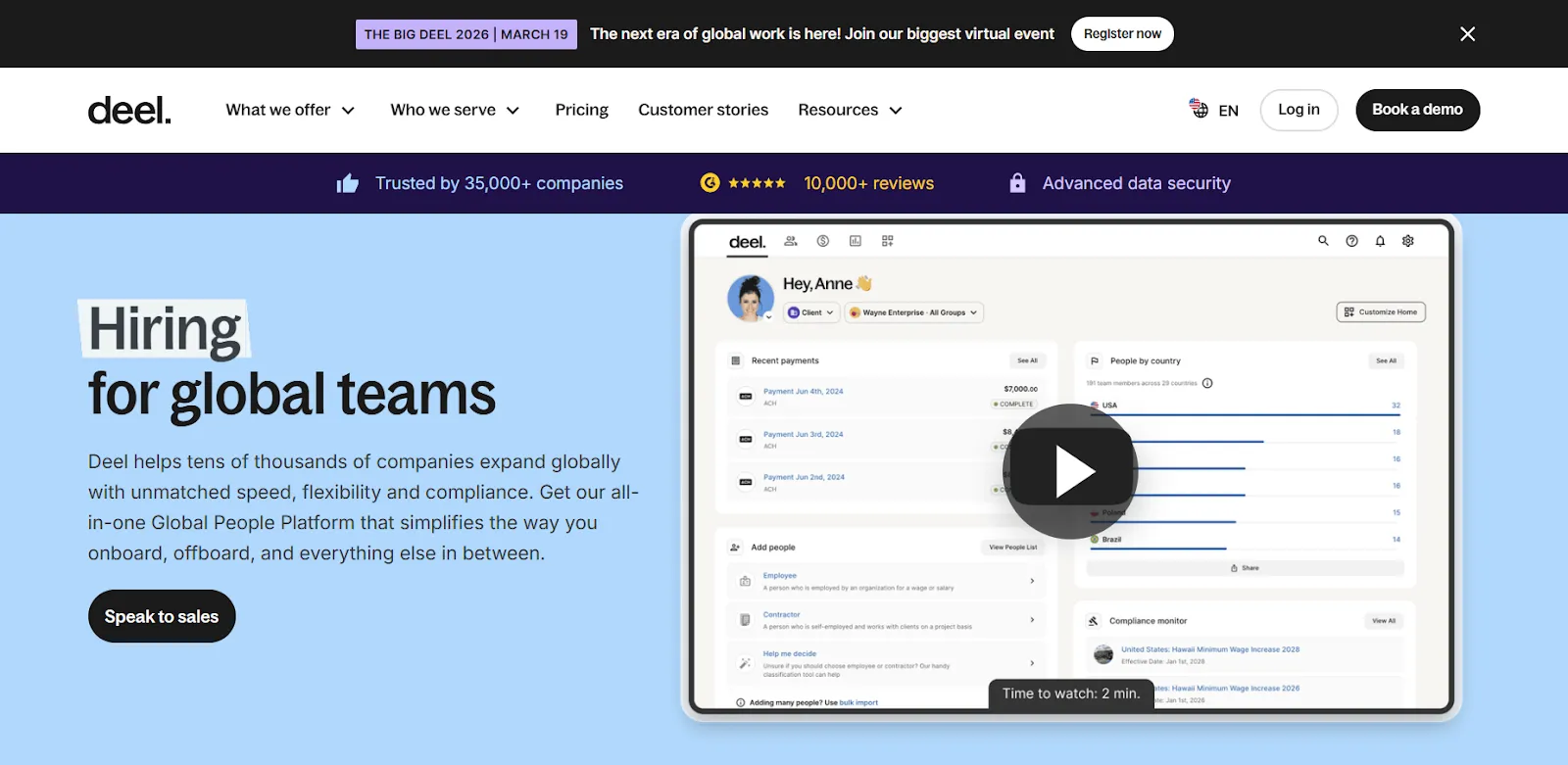
Deel is a high-growth EOR and contractor management platform covering 150+ countries through a combination of owned entities and strategic partnerships with local providers. The platform primarily serves tech companies and startups prioritizing speed and self-service capabilities, particularly those managing hybrid workforces combining contractors and full-time employees.
Deel differentiates through platform velocity and automation. Teams can onboard contractors in under 5 minutes and employees within days, making it attractive for companies where time-to-productivity outweighs deep compliance consultation.
Key Features
- Unified contractor and EOR management: Single platform handles both 1099/contractor payments and full employment, eliminating the need for separate systems when workforce models evolve, or contractors convert to employees
- Visa and immigration support: Built-in work permit application tracking and documentation management for teams relocating talent or hiring foreign nationals
- Equipment and expense management: Native integrations for shipping laptops, managing reimbursements, and handling equipment returns during offboarding
- API-first architecture for HRIS integration: Developer-friendly APIs enable deep integration with existing HR systems and custom workflows
Customer Review
"Deel's self-service platform let our hiring managers onboard contractors without waiting on HR approvals—but when we hit payroll issues in Brazil, support response times stretched into days." (Head of People Operations, Series C Startup)
Pros
- Platform speed enables onboarding contractors in minutes and employees in 2-3 days, significantly faster than WorkMotion's 7-10 day standard timelines
- Unified contractor-employee management eliminates platform switching when converting contractors to full-time employees
- Strong developer ecosystem with robust APIs and integrations makes Deel easier to embed into existing tech stacks
Cons
- Support quality degrades significantly at scale, particularly for non-US markets, where ticket resolution times can stretch 3-5 days
- Pricing at $599/employee/month becomes expensive compared to alternatives when managing teams in lower-cost markets
- Partner-based model in many countries means compliance quality varies by jurisdiction
Why Choose Deel Over WorkMotion?
- Contractor management integration: Deel handles both contractor payments and full employment in one system
- Faster onboarding velocity: Deel's automated workflows complete employee onboarding in 2-3 days versus WorkMotion's 7-10 day timelines
- API capabilities for tech-forward teams: Engineering organizations can build custom integrations and automate HR workflows
Pricing
Deel EOR services start at $599 per employee monthly, with contractor management at $49 per contractor, offering flexible plans that scale based on workforce composition and feature requirements.
3. Remote
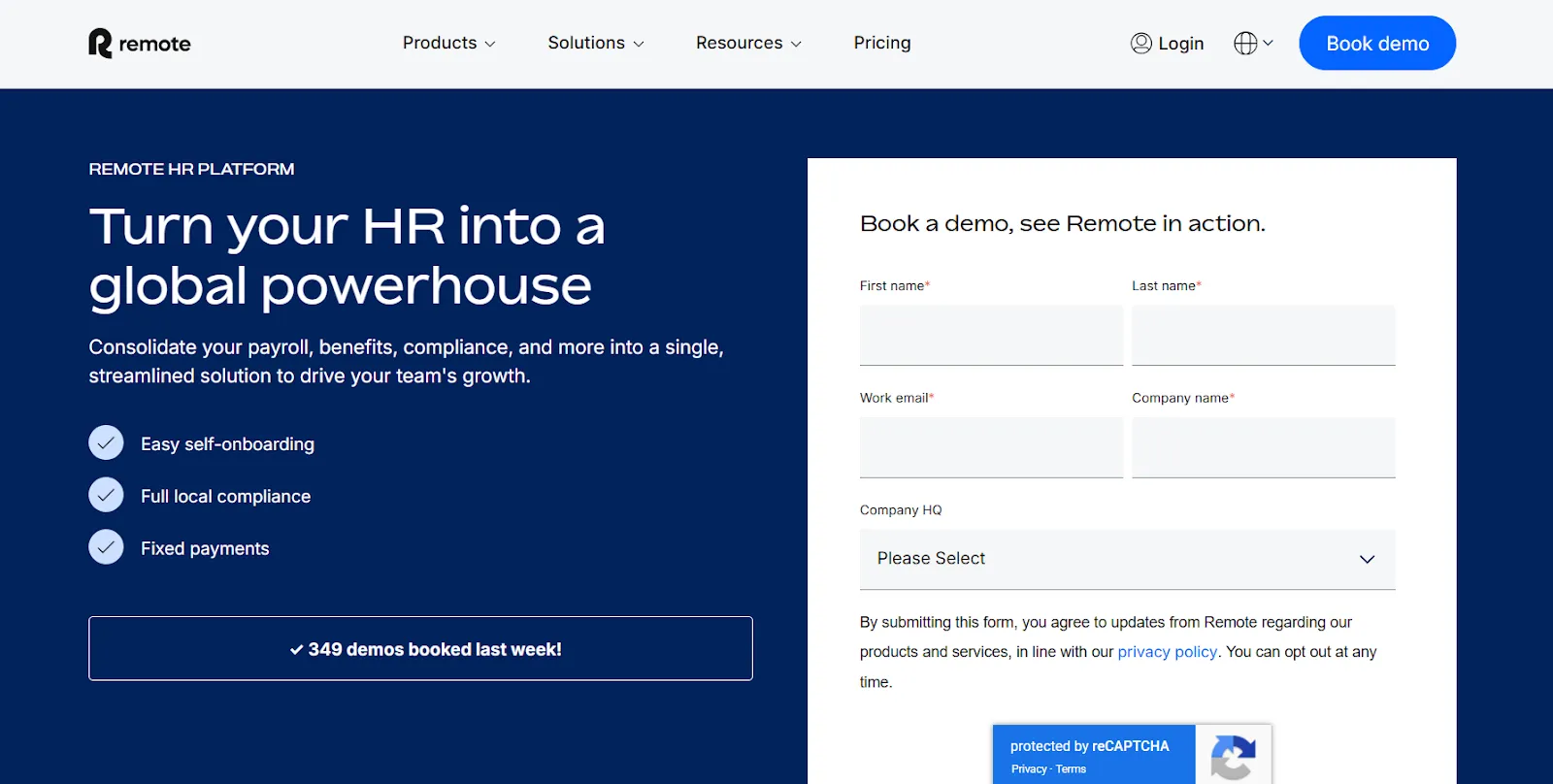
Remote is a global employment platform providing EOR services, contractor management, and payroll solutions across 80+ countries with emphasis on intellectual property protection and legal risk mitigation. The platform targets companies in IP-sensitive industries (software development, biotech, research) where employment contract terms directly impact patent ownership, invention rights, and proprietary information protection beyond standard confidentiality clauses.
Remote differentiates through legal framework strength, offering enhanced IP assignment clauses, inventions ownership language, and legal consultation that generic EOR contracts often miss, particularly valuable for companies building defensible technology moats.
Key Features
- IP-protected employment contracts: Standard agreements include robust intellectual property assignment, inventions ownership, and work-for-hire provisions
- Fair Price Guarantee program: Remote commits to price transparency by showing country-specific cost breakdowns and guaranteeing no hidden fees
- Global benefits benchmarking: Provides market data on competitive benefits packages by role and country
- Remote Talent recruitment integration: Optional recruiting services with local headhunters embedded in platform workflows
Customer Review
"Remote's IP protection was non-negotiable for our ML algorithms—their legal team reviewed our custom clauses and integrated them into country-specific contracts that WorkMotion couldn't accommodate." (CTO, AI Research Startup)
Pros
- Intellectual property protection depth exceeds WorkMotion's standard contracts, particularly valuable for R&D teams and software companies
- Fair Price Guarantee eliminates surprise fees during benefits enrollment or FX fluctuations
- Strong legal consultation included in base pricing gives teams access to employment law expertise
Cons
- Smaller country coverage than WorkMotion or Deel means teams expanding into frontier markets may hit geographic limitations
- Platform UX lags behind Deel's automation, particularly for contractor payments and invoice management
- Higher pricing than budget alternatives makes Remote expensive for cost-sensitive teams
Why Choose Remote Over WorkMotion?
- IP protection for tech companies: Remote's enhanced intellectual property clauses protect invention ownership more comprehensively
- Price transparency with Fair Price Guarantee: Remote shows exact country-level costs upfront and guarantees no hidden fees
- Included legal consultation: Access to employment lawyers for contract reviews and termination strategy comes standard
Pricing
Remote EOR pricing starts at $599 per employee monthly with transparent country-specific breakdowns and a Fair Price Guarantee covering benefits, taxes, and compliance without hidden fees.
4. Oyster
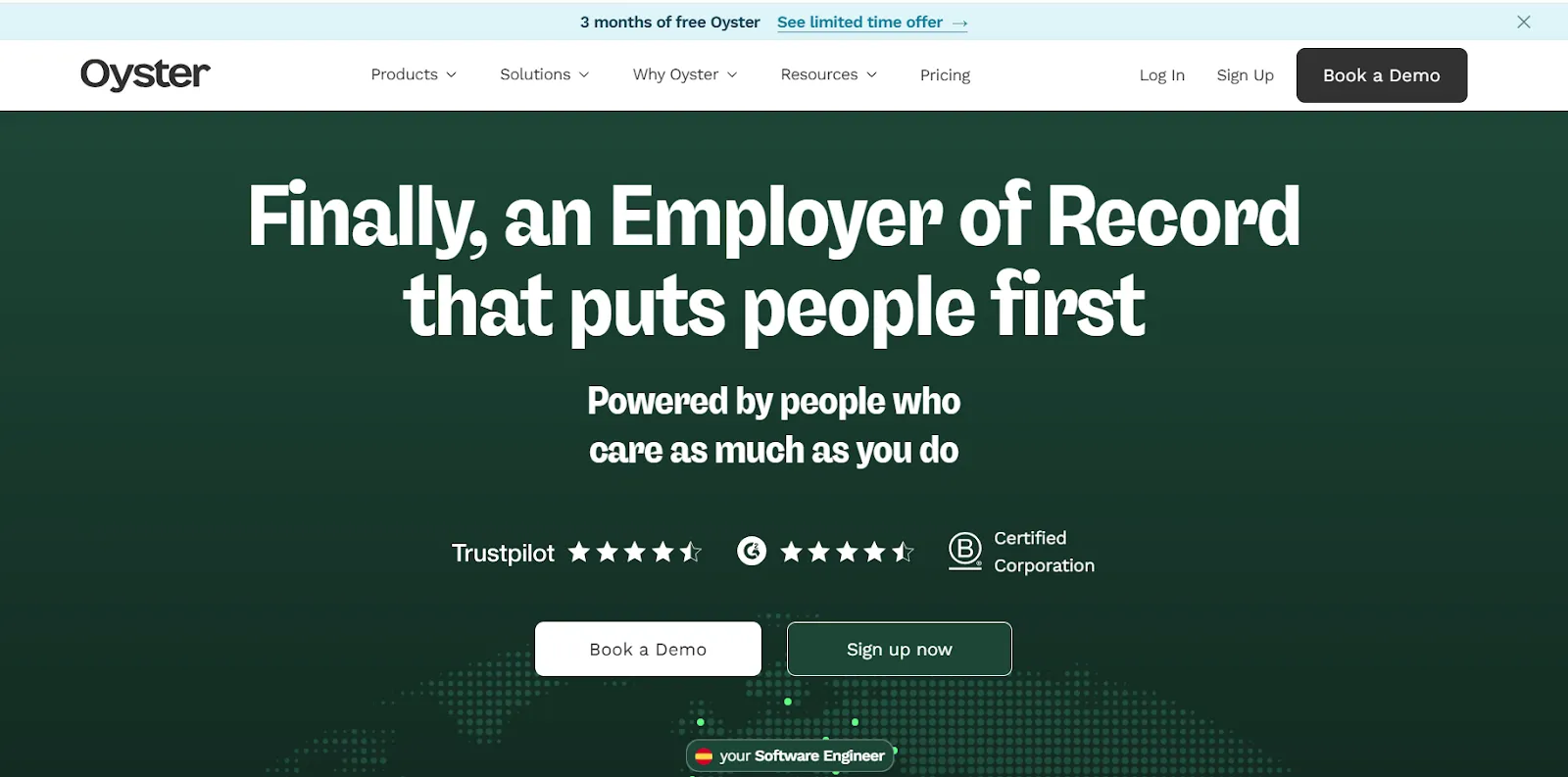
Oyster is a distributed-work platform offering EOR services across 180+ countries, leading competitors in geographic coverage while targeting remote-first companies scaling rapidly across emerging markets. The platform serves startups and scale-ups prioritizing speed-to-hire in frontier markets (Southeast Asia, Africa, Latin America) where traditional EOR providers lack infrastructure or require lengthy setup processes.
Oyster differentiates through market expansion velocity, launching new country capabilities faster than competitors and offering team-building tools like salary benchmarking, equity management, and distributed team engagement features beyond pure employment administration.
Key Features
- Fastest country expansion cadence: Oyster launches EOR capabilities in new markets every quarter, giving teams access to frontier regions ahead of competitors
- Equity management for distributed teams: Platform handles equity grants, vesting schedules, and exercise tracking across international jurisdictions
- Distributed team engagement tools: Built-in pulse surveys, anniversary tracking, and team-building resources
- Time-to-hire optimization: Automated compliance checks and contract generation reduce onboarding timelines to 3-5 days
Customer Review
"Oyster enabled our expansion into Kenya and Vietnam within a month—markets where WorkMotion couldn't operate and told us we'd need to wait 6-9 months for their partner network." (VP Talent, Remote-First SaaS Company)
Pros
- Country coverage leadership at 180+ nations provides access to frontier markets unavailable through WorkMotion
- Equity management integration eliminates separate systems for offering stock options to international employees
- Remote-first company culture tools built into the platform help distributed teams maintain engagement
Cons
- Newer market entries rely on partner networks rather than owned entities, creating variable service quality
- Higher pricing than regional specialists means teams pay for global coverage they don't need
- Limited customization options for benefits design or payroll timing
Why Choose Oyster Over WorkMotion?
- Frontier market access: Oyster operates in 20+ countries where WorkMotion has no presence
- Equity compensation management: Built-in equity tracking eliminates separate cap table systems
- Faster market launches: Oyster adds new country capabilities quarterly while WorkMotion takes 12-18 months
Pricing
Oyster pricing starts at $499 per employee per month, positioning between budget alternatives and premium providers while including equity management and distributed team tools in base pricing.
5. Papaya Global
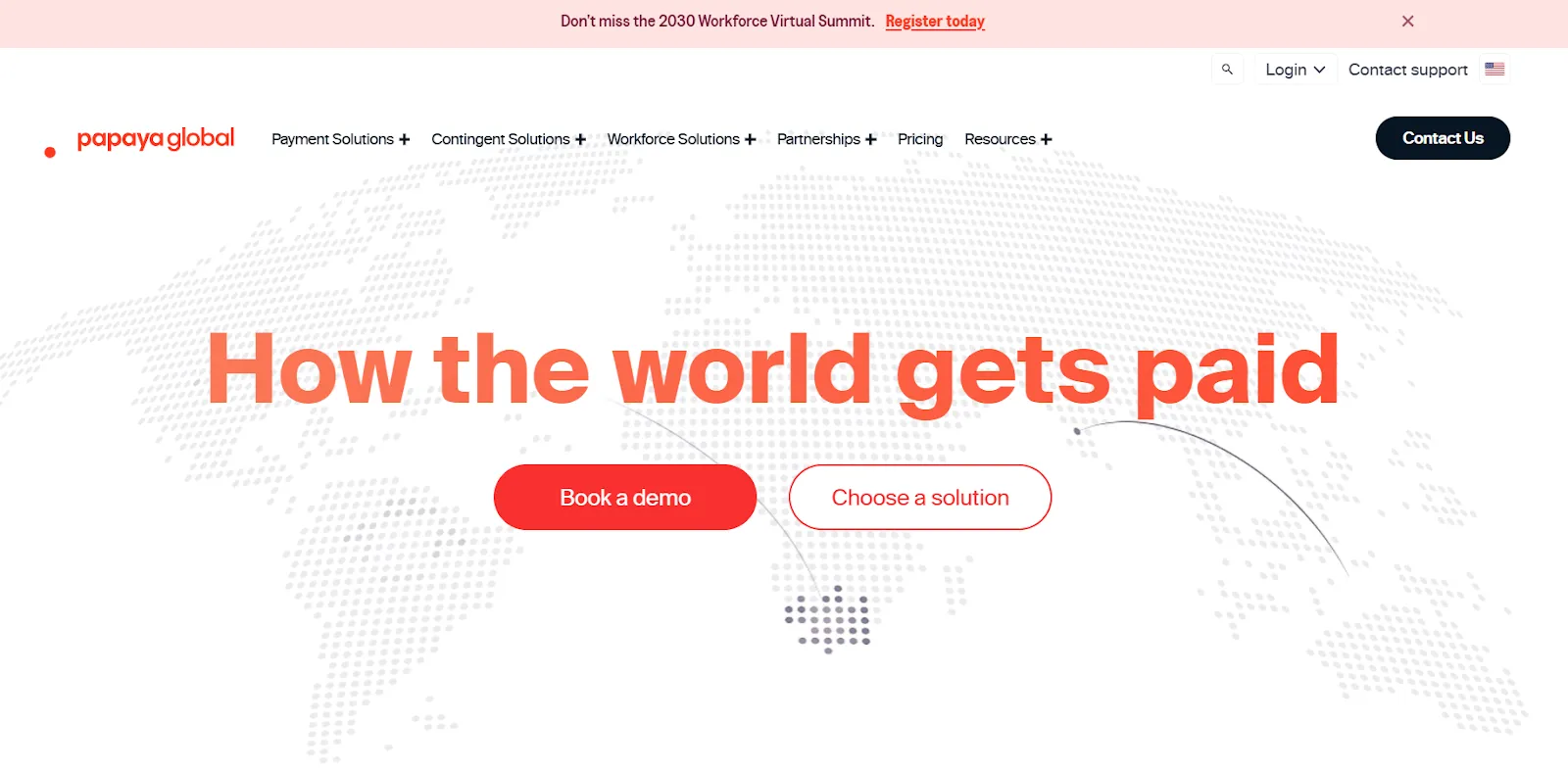
Papaya Global is an enterprise payroll and EOR platform serving large organizations managing 500+ international employees across multiple countries with complex finance reconciliation and audit requirements. The platform targets finance teams and controllership organizations at mid-market and enterprise companies where payroll accuracy, audit readiness, and accounting system integration outweigh self-service convenience or onboarding speed.
Papaya differentiates through financial infrastructure depth, offering GL mapping, accrual tracking, audit trails, and reconciliation tools that treat global payroll as a finance function rather than HR administration workflow.
Key Features
- General ledger mapping and exports: Platform automatically categorizes payroll expenses by department, cost center, and account codes
- Accrual tracking across jurisdictions: Real-time visibility into PTO liabilities, severance obligations, and benefit accruals by country
- Audit-ready compliance documentation: Automated retention of payslips, tax filings, and employment contracts with version control
- Multi-currency treasury management: Consolidated cash flow forecasting across countries with FX hedging recommendations
Customer Review
"Papaya's GL integration saved our finance team 40 hours monthly reconciling payroll across 15 countries—WorkMotion's black-box invoicing created audit nightmares we couldn't scale through." (CFO, Series D E-commerce Platform)
Pros
- Finance system integration depth enables automated GL posting and reconciliation that WorkMotion's manual invoicing can't match
- Audit readiness built into the platform satisfies SOX compliance and external audit requirements
- Enterprise-grade customization allows complex benefits structures and jurisdiction-specific payroll rules
Cons
- Custom pricing model lacks transparency, requiring lengthy sales cycles that delay decisions
- Platform complexity requires dedicated training, making Papaya overkill for teams under 100 employees
- Implementation timelines stretch 8-12 weeks compared to WorkMotion's 2-3 week onboarding
Why Choose Papaya Global Over WorkMotion?
- Finance system integration: Papaya's GL mapping and automated reconciliation eliminate manual accounting work
- Audit-ready documentation: Built-in compliance trails satisfy external audit requirements
- Enterprise customization depth: Complex benefits structures are native capabilities in Papaya's platform
Pricing
Papaya Global uses custom enterprise pricing based on employee count, countries covered, and feature requirements, typically starting around $8-12 per employee monthly with implementation fees.
6. Multiplier
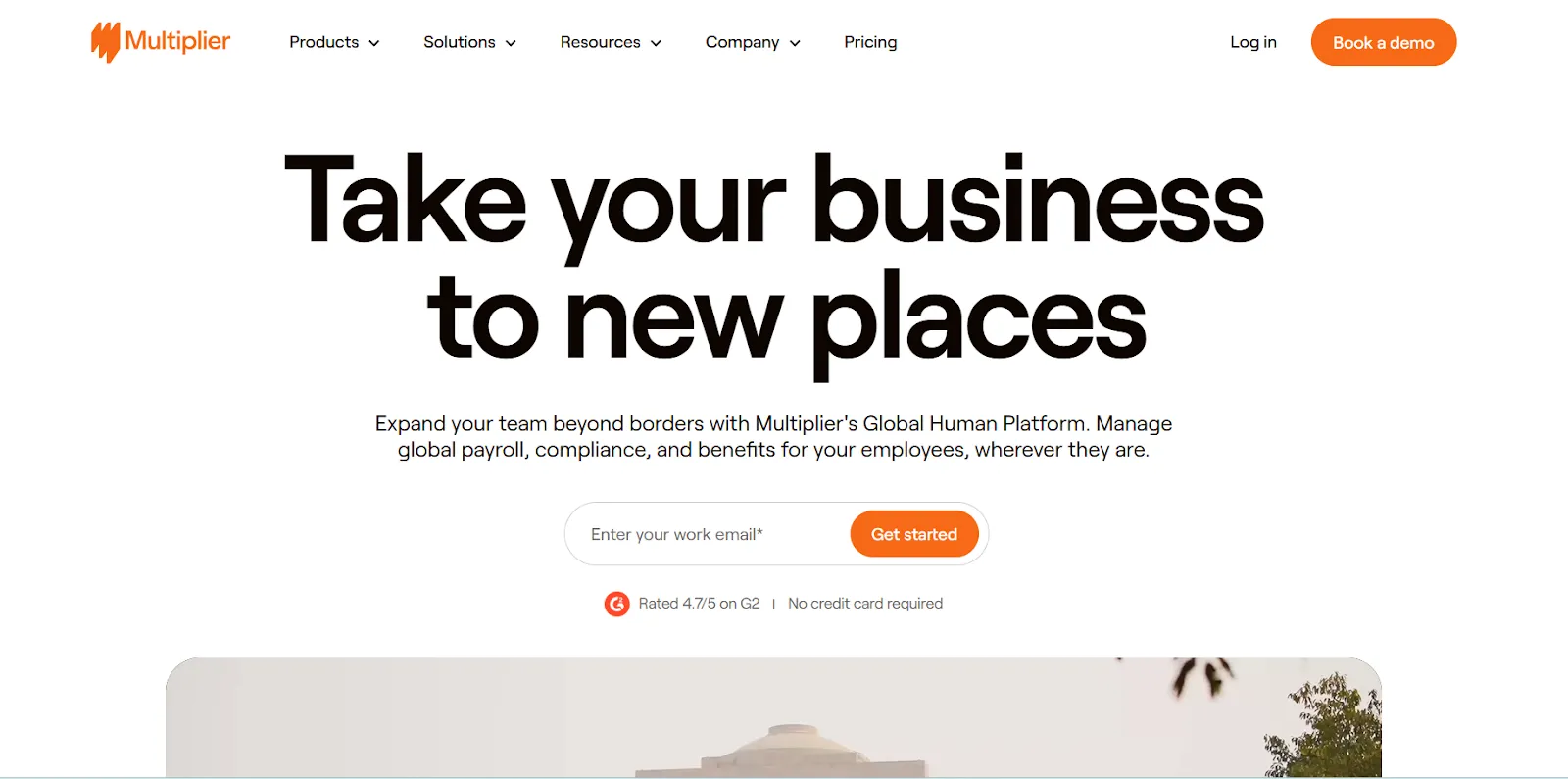
Multiplier is an Asia-focused EOR platform providing employment services across 30+ APAC countries with emphasis on localized benefits customization and regional compliance depth beyond generic global providers. The platform serves companies establishing engineering hubs, customer support centers, or back-office operations in Southeast Asia, India, and East Asia, where benefits expectations and compliance nuances differ significantly from Western markets.
Multiplier differentiates through benefits localization, offering country-specific health insurance carriers, retirement plans, transportation allowances, and meal vouchers that match local market norms rather than imposing standardized Western benefit structures on Asian employees.
Key Features
- APAC benefits localization: Platform integrates with regional insurance carriers and benefits vendors to offer competitive packages
- Regional payroll calendar optimization: Handles jurisdiction-specific payment timing requirements
- Multi-language contract support: Employment agreements and payslips available in Mandarin, Hindi, Bahasa, Japanese, Korean, and Vietnamese
- APAC compliance specialization: Deep knowledge of nuanced regulations like India's PF exemption rules
Customer Review
"Multiplier understood Indian benefits expectations better than WorkMotion—their PF management and gratuity calculations were accurate from day one instead of requiring months of corrections." (Head of India Operations, FinTech Unicorn)
Pros
- APAC benefits depth provides localized packages matching regional market expectations
- Regional compliance expertise prevents costly mistakes in India PF regulations or Singapore pass quotas
- Lower pricing than global platforms at $400/employee monthly makes Multiplier cost-effective for APAC-concentrated teams
Cons
- Geographic limitation to APAC means companies expanding into Europe or Americas require additional EOR relationships
- Smaller platform footprint results in fewer native integrations with Western HRIS systems
- Less established brand requires more internal selling to procurement teams
Why Choose Multiplier Over WorkMotion?
- APAC benefits localization: Multiplier offers region-specific benefits matching local expectations
- Regional compliance depth: Deep expertise prevents costly mistakes in nuanced Asian jurisdictions
- Cost efficiency for APAC teams: $400/employee monthly pricing undercuts WorkMotion's global rates by 30%+
Pricing
Multiplier pricing starts at $400 per employee monthly for APAC coverage, offering regional specialization at a lower cost than global platforms charging for worldwide capabilities.
7. Velocity Global

Velocity Global is an enterprise-grade EOR and global expansion platform serving large organizations managing 500+ international employees across strategic markets requiring dedicated country-level support and consulting. The platform targets multinational corporations, Fortune 500 companies, and private equity portfolio companies where employment compliance risk, scalability, and white-glove service justify premium pricing over self-service platforms.
Velocity Global differentiates through assigned country managers for strategic markets, legal consultation included in service fees, and enterprise implementation support that treats global employment as a partnership rather than transactional software purchase.
Key Features
- Dedicated country managers: Assigned regional experts provide proactive compliance monitoring and strategic guidance
- Legal risk mitigation consultation: Included employment lawyers' review of termination strategies and conduct severance negotiations
- Enterprise implementation management: Dedicated onboarding teams handle data migration and change management
- Scalability infrastructure: Platform architecture supports rapid headcount expansion from 100 to 1000+ employees
Customer Review
"Velocity's dedicated India country manager guided us through a complex RIF that WorkMotion's support team couldn't handle—having direct legal expertise prevented what could've been a costly severance dispute." (CHRO, PE-Backed Technology Company)
Pros
- Dedicated country managers provide proactive compliance guidance and relationship continuity
- Included legal consultation eliminates separate counsel retainers for employment matters
- Enterprise scalability proven with customers managing 1000+ employees across dozens of countries
Cons
- Custom pricing model without published rates extends sales cycles and reduces price transparency
- Premium positioning makes Velocity cost-prohibitive for startups or teams under 100 employees
- Implementation timelines of 10-12 weeks delay hiring capacity
Why Choose Velocity Global Over WorkMotion?
- Dedicated country managers: Assigned regional experts provide proactive guidance
- Included legal risk mitigation: Employment lawyers review terminations without additional retainers
- Enterprise scalability assurance: Proven infrastructure supporting 1000+ employee deployments
Pricing
Velocity Global uses custom enterprise pricing based on employee count, service level requirements, and country complexity, typically targeting organizations with 500+ international employees.
8. Horizons (formerly Globalization Partners)
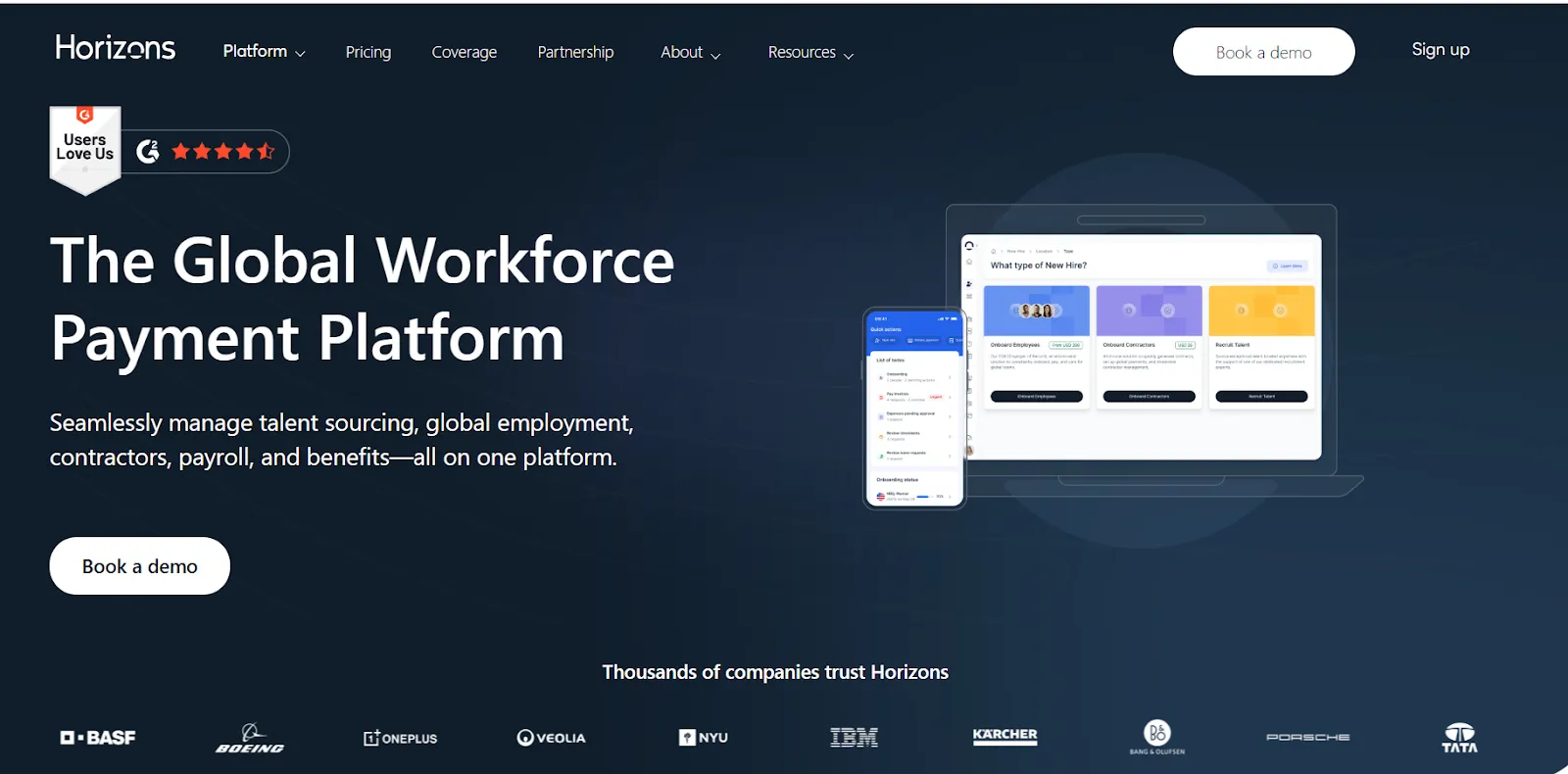
Horizons is an established EOR provider operating owned entities in 180+ countries with emphasis on employment liability insurance coverage and risk mitigation for compliance-cautious organizations. The platform serves risk-averse companies (publicly traded corporations, regulated industries, legal departments prioritizing protection) where included employment liability coverage and insurance backstops justify premium pricing over competitors.
Horizons differentiates through included employment practices liability insurance (EPLI) covering wrongful termination, discrimination claims, and wage disputes that other EOR platforms either exclude or charge separately, transferring legal exposure from client to provider.
Key Features
- Included employment liability insurance: EPLI coverage protects companies from wrongful termination lawsuits and discrimination claims
- Owned entity network depth: Horizons operates legal entities in 180+ countries rather than relying on partner networks
- Established track record since 2012: Decade-plus operating history provides confidence in platform stability
- Regulatory industry expertise: Specialized knowledge serving financial services, healthcare, and other regulated industries
Customer Review
"The included EPLI coverage was non-negotiable after our previous EOR left us exposed during a termination dispute in France—Horizons' insurance absorbed legal costs that would've hit six figures." (General Counsel, Life Sciences Company)
Pros
- Employment liability insurance included eliminates separate EPLI policy costs and transfers legal risk
- An owned entity network provides consistent service quality across countries
- Long operating history since 2012 demonstrates platform stability
Cons
- Premium pricing significantly exceeds alternatives, making Horizons cost-prohibitive for startups
- Platform UX feels dated compared to modern alternatives like Deel or Remote
- Sales-driven engagement model with lengthy contract negotiations frustrates teams
Why Choose Horizons Over WorkMotion?
- Included employment liability insurance: EPLI coverage protects against wrongful termination lawsuits
- Fully owned-entity network: Horizons operates legal entities in all 180 countries
- Regulatory industry depth: Specialized expertise serving regulated sectors
Pricing
Horizons uses custom enterprise pricing typically ranging from $800 to $1200 per employee monthly, depending on countries, service requirements, and included insurance coverage, targeting risk-averse organizations.
9. Atlas HXM
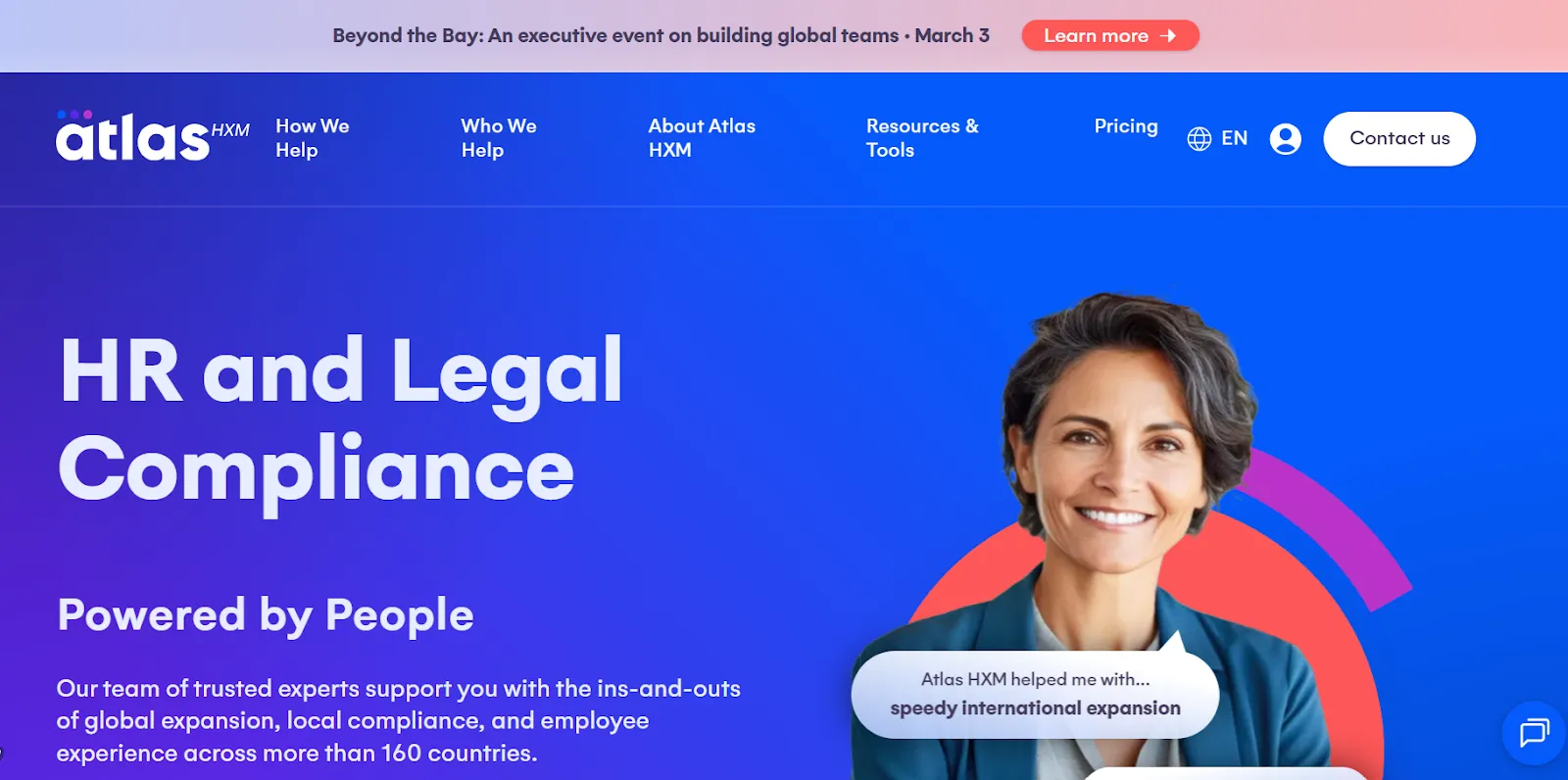
Atlas HXM is an all-in-one HR platform combining EOR services, HRIS functionality, payroll management, and performance tools in a unified system for companies wanting consolidated vendor relationships. The platform serves mid-market HR teams managing 100-500 employees who need both international employment coverage and core HR capabilities (performance reviews, goal tracking, compensation planning) without juggling separate systems.
Atlas differentiates through integrated HR workflows where EOR employment data automatically populates performance management, compensation cycles, and workforce analytics, eliminating the data synchronization headaches that separate EOR and HRIS vendors create.
Key Features
- Native performance management integration: Employee goals and reviews directly access EOR employment data without manual syncing
- Compensation planning workflows: Merit increase planning and bonus calculations leverage live payroll data
- Workforce analytics and reporting: Unified dashboards show headcount, attrition, and compensation trends
- Single vendor relationship: Consolidated contracts, billing, and support eliminate vendor coordination overhead
Customer Review
"Atlas eliminated our BambooHR and WorkMotion integration headaches—having performance reviews and EOR data in one system saved our HR team hours of manual data entry weekly." (VP People Operations, HealthTech Startup)
Pros
- Integrated HRIS functionality eliminates separate system costs and integration maintenance
- Performance management native to the platform enables continuous feedback without data sync delays
- Unified reporting provides workforce analytics across hiring, compensation, and performance
Cons
- Higher all-in pricing at $650/employee monthly makes Atlas expensive compared to using budget EOR plus separate HRIS
- Best-of-breed functionality trails specialized tools (performance management less robust than Lattice)
- Platform switching costs increase dramatically because Atlas owns employee data and HRIS records
Why Choose Atlas HXM Over WorkMotion?
- Integrated HRIS and performance management: Native HR tools eliminate separate BambooHR or Lattice subscriptions
- Unified workforce analytics: Single-system reporting shows hiring trends and compensation analysis together
- Vendor relationship simplification: One contract and support channel eliminates coordination overhead
Pricing
Atlas HXM pricing starts at $650 per employee monthly, including EOR services, HRIS, performance management, and payroll, positioning as a premium all-in-one solution.
10. Remofirst
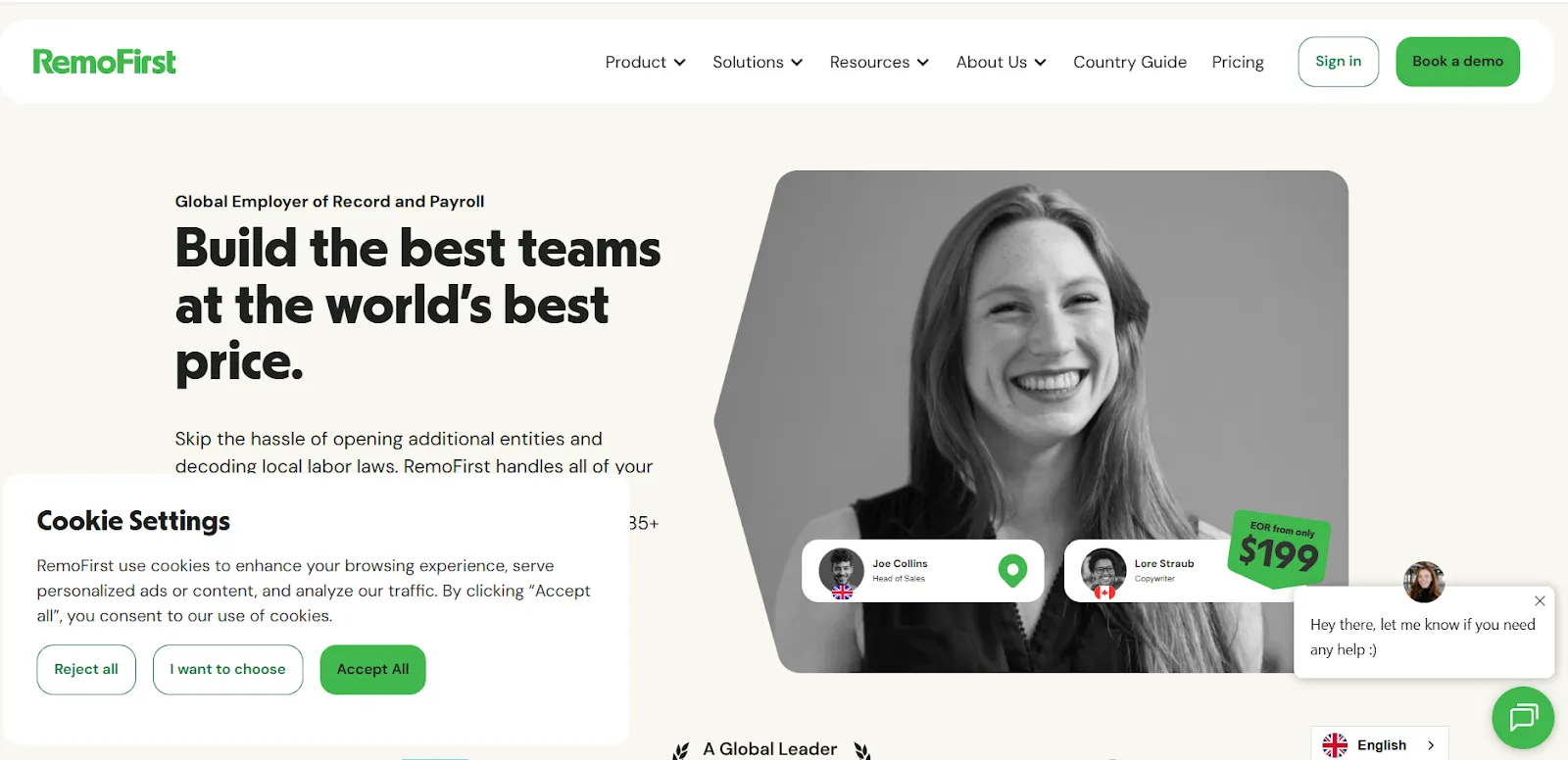
Remofirst is a budget-focused EOR platform targeting cost-conscious startups and SMBs hiring in Latin America, Eastern Europe, and select Asian markets where price sensitivity outweighs feature breadth. The platform serves early-stage companies, bootstrapped startups, and cost-optimizing teams managing under 50 international employees, where basic employment administration and compliance coverage justify lower-cost alternatives to premium providers.
Remofirst differentiates through aggressive pricing at $199/employee monthly, undercutting competitors by 30-50% while delivering core EOR functionality (contracts, payroll, benefits, compliance) without premium features like dedicated support or customization.
Key Features
- Lowest-cost LATAM coverage: At $199/employee monthly, it enables hiring in Mexico, Brazil, Argentina, and Colombia at half the cost
- Self-service platform with ticket support: Lean operational model uses ticketed support and help center documentation
- Contractor-to-employee conversion: Built-in workflows support transitioning contractors to full employment
- Transparent fixed pricing: Simple per-employee monthly fee with no setup costs or hidden fees
Customer Review
"Remofirst let us hire our first three LATAM engineers when Deel's pricing would've cut our runway by 6 months—basic features were enough at our stage." (Co-Founder, Pre-Seed Developer Tools Startup)
Pros
- Lowest pricing in the market at $199/employee monthly enables hiring in budget-constrained situations
- LATAM focus provides strong coverage in cost-effective engineering markets
- Transparent pricing with no hidden fees eliminates budget surprises
Cons
- Limited country coverage focuses on LATAM, Eastern Europe, and select Asian markets
- Ticket-based support without dedicated account managers means slower response times
- Basic platform lacks advanced features like custom benefits design or API integrations
Why Choose Remofirst Over WorkMotion?
- Budget-friendly pricing: At $199/employee monthly, costs 60%+ less than WorkMotion's standard rates
- LATAM engineering market access: Strong coverage in markets where US startups build initial international teams
- Transparent cost structure: Fixed per-employee pricing eliminates variable invoicing and hidden fees
Pricing
Refirst pricing starts at $199 per employee monthly with transparent fixed rates and no setup fees, targeting budget-conscious startups and SMBs.
Factors to Consider When Choosing a WorkMotion Alternative
1. What is your geographic priority: depth or breadth?
Country count creates an illusion of capability. The real question: does your provider operate owned entities in your strategic markets, or are you inheriting partner risk in markets that matter?
India, Brazil, the UK, and Germany aren't interchangeable. Compliance depth, payroll accuracy, and termination support quality vary dramatically between owned infrastructure and partner networks. Choose platforms with entity presence where you're building permanent teams, not where you might hypothetically hire someone someday. For comprehensive guidance on evaluating EOR providers, see our complete employer of record comparison.
2. How will you handle exceptions and emergencies?
Steady-state operations hide support quality differences. The truth emerges during payroll exceptions, terminations, visa issues, or mid-cycle benefit changes when speed and accuracy carry consequences.
Test support responsiveness during your evaluation. Ask providers how they handle urgent terminations, payroll corrections, or compliance questions requiring same-day answers. Ticket-based systems with 48-hour SLAs become expensive liabilities when employment issues require immediate resolution.
3. What does your finance team need for reconciliation and audits?
Black-box invoicing creates month-end reconciliation nightmares and audit preparation headaches. If your finance team reconciles payroll across countries, runs accruals, or prepares for external audits, invoice transparency and GL integration become strategic requirements, not nice-to-haves.
Ask providers for sample invoices showing country-level breakdowns, benefit costs, and tax withholding details. Generic consolidated invoicing that works fine for 10 employees becomes unsustainable at 50+ employees when controllership demands visibility.
4. Are you building permanent operations or testing markets?
Pure EOR works when testing markets. Building permanent operations (GCCs, engineering hubs, regional headquarters) requires entity formation support, local recruiting, and benefits customization beyond standard packages.
If India, Brazil, or Mexico represent strategic long-term investments, choose providers offering entity transition services, local HR advisory, and market expertise rather than treating every country as an interchangeable EOR territory.
5. What is the true cost, including switching risk?
Advertised per-employee fees miss the complete cost picture. Factor in:
- Implementation time and data migration complexity
- Employee disruption and knowledge transfer to a new provider
- Risk of payroll errors during transition
- Loss of institutional knowledge about your specific setup
The cheapest option today can become the most expensive decision when switching vendors in 18 months costs 6 months of productivity and creates employee attrition. Choose providers you can scale with rather than platforms you'll outgrow within your next funding round.
Why Gloroots Is a Strong Alternative to WorkMotion
Gloroots serves HR leaders and finance teams at growth-stage companies building permanent international operations, particularly those establishing GCCs in India or requiring invoice transparency for controllership.
Where Gloroots Outperforms WorkMotion
India infrastructure advantage: Gloroots operates through owned legal entities in India, not partner networks. This means faster statutory filings, accurate PF/ESIC/gratuity management, and cleaner audit trails. WorkMotion's partner-dependent model often creates filing delays that slow payroll processing by 3-5 days.
GCC acceleration eliminates expansion delays: Most companies face a painful choice when entering India: wait 6-9 months for entity formation or skip hiring entirely. Gloroots solves this with interim hiring under their entity while your own India entity forms. Once ready, employees transition seamlessly. WorkMotion doesn't offer entity transition support.
Finance visibility that controllers need: Gloroots provides line-item invoicing with country-level cost breakdowns, transparent FX rates, and GL mapping support. WorkMotion's consolidated invoicing creates reconciliation headaches at month-end when your CFO needs granular data for forecasting or audits.
Managed service responsiveness: Gloroots assigns dedicated Customer Success Managers who handle exceptions and compliance questions. WorkMotion's ticket-based support means waiting 48 hours when you need same-day resolution for terminations or payroll issues.
Gloroots vs WorkMotion: Feature Comparison
Gloroots is the right fit if you're:
- Hiring 10+ employees in India within the next 12 months
- Establishing a Global Capability Center and needs immediate hiring while your entity forms
- Requiring finance visibility with line-item cost breakdowns and GL mapping
- Building permanent India operations with entity transition services and local expertise
Ready to explore how Gloroots handles India expansion and GCC setup?
Schedule a consultation to discuss your specific hiring timeline, compliance requirements, and entity transition strategy.
Frequently Asked Questions About WorkMotion Alternatives
1. What are the top WorkMotion alternatives?
The strongest alternatives depend on your priority: Gloroots for India GCC depth and invoice transparency, Deel for platform speed, Remote for IP protection, and Oyster for frontier market coverage. Emphasize the owned entity's presence in your strategic markets over the generic country count.
2. Is WorkMotion suitable for large-scale use?
WorkMotion handles steady-state operations for teams of up to 100-150 employees reasonably well, particularly in European markets where their entity infrastructure is strongest. Limitations emerge during rapid scaling or when operating outside their core European strength, like India or Southeast Asia.
3. How does Gloroots compare to WorkMotion?
Gloroots provides deeper India specialization with GCC setup support, PF/ESIC management, and local recruiting, plus line-item invoice transparency. The trade-off: Gloroots operates in 100+ countries versus WorkMotion's 160+. Choose Gloroots when India represents a strategic investment or when financial visibility outweighs the maximum country count.
4. What is the best free alternative to WorkMotion?
No legitimate EOR offers free services. Employment compliance and payroll processing carry real costs that free models can't sustain. The lowest-cost option is Remofirst at $199/employee monthly for LATAM markets, but "cheapest" and "best" diverge quickly where compliance mistakes create risks that dwarf monthly fee savings.